
Accessibility Tools

12/7 Eve of the Feast of the Immaculate Conception

12/7 Eve of the Feast of the Immaculate Conception: In conceiving, the Virgin conceived the Kingdom of the Fiat; in being born, She gave back to us the rights to possess It.Book of Heaven
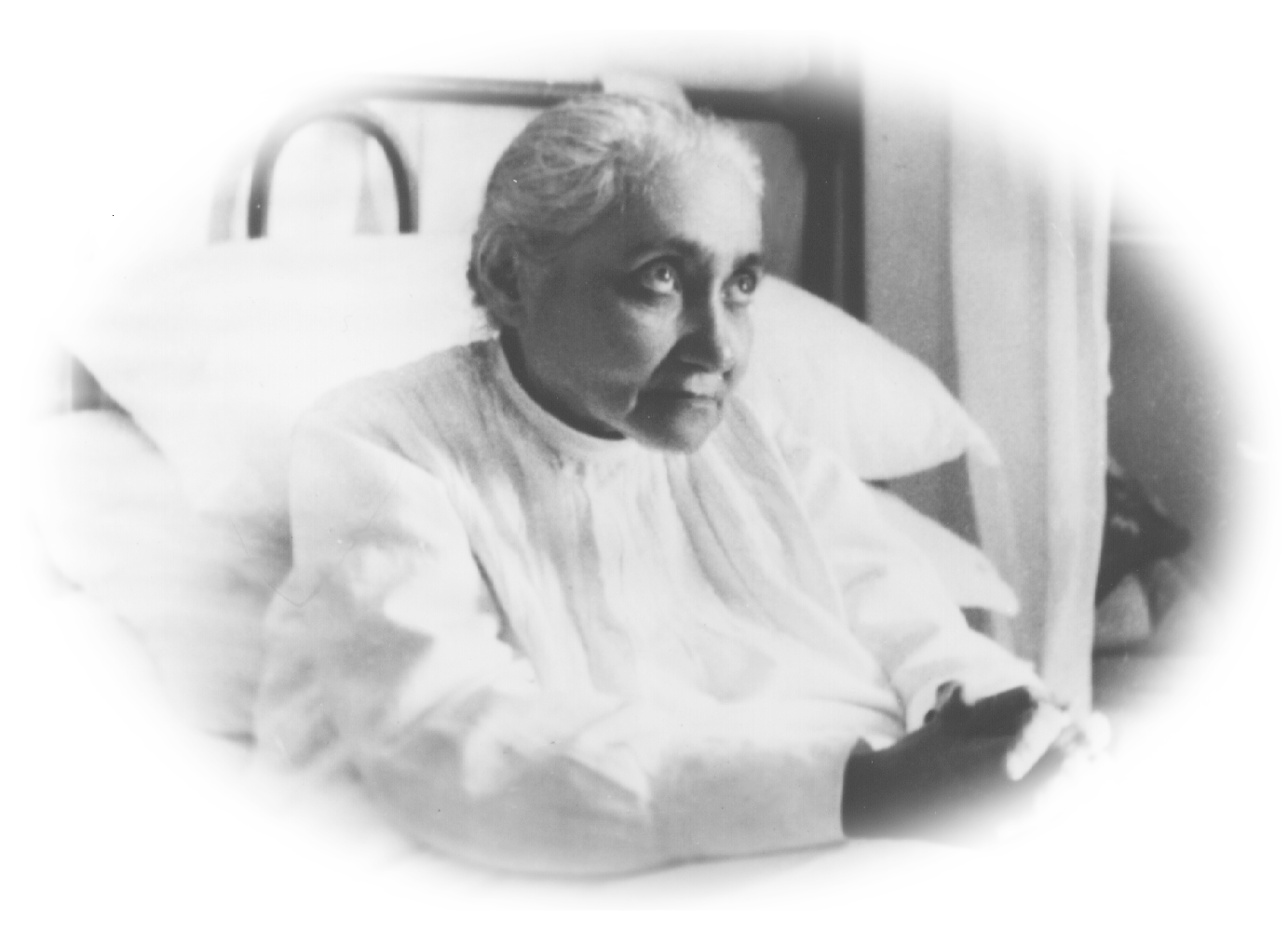
Book of Heaven
Volume 24; September 16, 1928

My abandonment in the Fiat is continuous; and while I was following Its acts, my poor mind paused to think about the Conception of the Celestial Queen and Her great fortune of being exempted from original sin.

And my Beloved Jesus, moving in my interior, told me“My daughter(Luisa) , the seed with which the Celestial Sovereign was conceived was taken from the human stock, because She too had Her human life as all other creatures, as I too had.  However, there is this great difference, not conceded to any other creature:  before Her beautiful soul was conceived, My Fiat, with Its omnipotence, concentrated Its rays in this seed, and with Its light and heat It annihilated the evil that was in it, and made it die, purifying the seed completely, and rendering it pure and holy, and exempt from original sin; and then, the Immaculate Baby Girl was conceived in this seed.

“So, the whole portent of the Immaculate Conception was operated by My Divine Will.  It did not make another human seed, nor did It destroy it, but It purified it; and with Its heat and light It removed from it all the humors that this seed had contracted from the sin of Adam, and It restored in Her the human seed, just as it had come out of Our creative hands.  Therefore, as the little Virgin Queen was conceived, the Kingdom of My Divine Will was conceived in Her and in the human generations, because in forming and giving surprising graces to one creature, in her We look at the whole humanity of the human family, as if it were one alone.  See, then, as the Virgin was conceived in this seed exempt from every stain—which was all work of the Divine Fiat—Its Divine Kingdom was conceived again within humanity; and as the Immaculate little Virgin was born, the right to be able to possess It was given back. 

“Now, when I came upon earth to take on human flesh, I made use of the seed of the Sovereign of Heaven, and it can be said that We worked together to form again this Kingdom of Ours in the human generations.  So, there is nothing left but to know It in order to possess It, and this is why I am manifesting what belongs to My Kingdom and to My Divine Will, so that the creature may cover Its ways, follow Our steps, and take possession of It.  And My Divine Will, with Its light and heat, will repeat the prodigy of removing the bad humors that the human seed possesses; and in order to be sure, It will place the seed of Its light and heat, and will constitute Itself life of that seed.  And so they will exchange possession:  My Divine Will will take possession of the seed in order to form in it Its life of light, of heat and sanctity; and the creature will return to take new possession of the Kingdom of My Divine Fiat.

“See then, My daughter(Luisa), everything is ready—nothing else is needed but to make It known.  And this is why I so much yearn that what regards My Divine Will become known—to cast into creatures the desire to possess a good so great, so that My Will, drawn by their desires, may concentrate Its luminous rays and, with Its heat, perform the prodigy of giving back the right to possess Its Kingdom of peace, of happiness and of sanctity.” . . .
Permanent link to this article: https://luisapiccarreta.com/127-eve-of-the-feast-of-the-immaculate-conception/

12/6 Today is the Feast Day of St. Nicholas

12/6 Today is the Feast Day of St. Nicholas


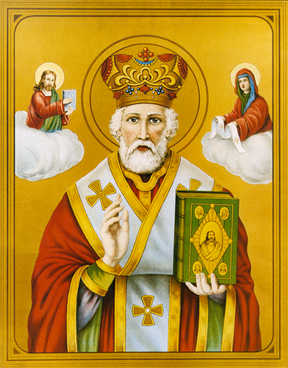
St. Nicholas of Bari
(also known as St. Nicholas of Myra) 

When the Saracens invaded Myra (part of modern day Turkey) the relics of St. Nicholas were moved to Bari in Italy. The Archbishop for Corato has jurisdiction over the provinces of Trani, Bari, and Bisceglie. The Servant of God Luisa Piccarreta, the Little Daughter of the Divine Will, was born and lived her whole life in Corato, the province of Bari.

The Archbishop of Trani also has  the title of Bishop of Nazareth, because when Palestine was lost in 1190 the title of that see was transferred to Barletta (the ancient Barduli), a seaport on the Adriatic, a little south of Trani, to which diocese it then belonged.

Book of Heaven

Ersonal Reflection pic

The Servant of God, Luisa Piccarreta

the Little Daughter of the Divine Will:

The Call of the Creature to the Order, the Place and the Purpose
for which He was Created by God
Volume 6 – December 6, 1904

The beginning of Eternal Beatitude is to lose every taste of one’s own.

The Servant of God, Luisa Piccarreta the Little Daughter of the Divine Will:

The beginning of Eternal Beatitude is to lose every taste of one’s own.

As I continued struggling, blessed Jesus came for just a little, and I saw myself as naked, stripped of everything – perhaps a soul more miserable than I am cannot be found, so extreme is my misery.  What a dismal change!  If the Lord does not make a new miracle of His omnipotence to make me rise again from this state, I will certainly die of misery.

Then blessed Jesus told me:  “My daughter, courage, the beginning of Eternal Beatitude is to lose every taste of one’s own.  In fact, as the soul keeps losing her own tastes, the Divine Tastes take possession of her, and the soul, having undone and lost herself, no longer recognizes herself; she finds nothing else of her own – not even spiritual things.  Seeing that the soul has nothing else of her own, God fills her with all of Himself and replenishes her with all the Divine Happinesses.  Only then can the soul truly be called blessed, because as long as she had something of her own, she could not be exempt from bitternesses and fears, nor could God communicate His Happiness to her.  No soul that enters the port of Eternal Beatitude can be exempted from this point – painful, yes, but necessary; nor can she do without it.  Generally they do it at the point of death, and Purgatory does the last job; this is why, if creatures are asked what God’s taste is, what Divine Beatitude means, these are things unknown to them and they are unable to articulate a word.  But with the souls who are My beloved, since they have given themselves completely to Me, I do not want their Beatitude to have beginning up there in Heaven, but to have beginning down here on earth. I (Jesus) want to fill them (souls who have given themselves completely to Our Lord Jesus Christ) not only with the Happiness, with the Glory of Heaven, but I want to fill them with the goods, with the sufferings, with the virtues that My Humanity had upon earth; therefore I strip them, not only of material tastes, which the soul considers as dung, but also of spiritual tastes, in order to fill them completely with My Goods and give them the beginning of True Beatitude.”

Permanent link to this article: https://luisapiccarreta.com/126-today-is-the-feast-day-of-st-nicholas/

12/6 Feast of St. Nicholas of Bari

Visiting Basilica of St. Nicholas (Bari, Italy)

(by Vera Bourenina)

In July 2001 God gave me the opportunity of a pilgrimage to Italy to venerate the relics of St. Nicholas the Wonder Worker, to pray for all and, of course, our church community, in front of  the tomb with the holy relics of the saint.


fasade of the Basilica

St. Nicholas Basilica is built in the Roman-Norman style. The entire construction was finished in 12th century

A fragment of the main entrance to the Basilica of St. Nicholas

The ceilings of the nave were painted by Carlo Rosa in 17th century in the Baroque style

It was a gift from Serbian king Stephan Uroš III to express his thankfullness to St. Nicholas for the miraculous returning of his vision. There is a common belief, the icon was painted at the time when St. Nicholas was alive.

Horses
Open Space

There are several Russian icons of St. Nicholas in the Basilica. The oldest one with the rich silver framework was painted in 18th century

Open Space

The monument to St. Nicholas the wonder Worker was designed be Zurab Tsereleli, the President of the Russian Academy of Arts and installed outside of the Basilica in 2003

The holy relics of St. Nicholas are lying in the crypt (underground level) of the Basilica of St. Nicholas in the city of Bari located on the shore of the Adriatic Sea.

Although this Basilica belongs to the Roman-Catholic church and is managed by the monks of the Dominican Order, priests of different Christian confessions are allowed to offer services in the crypt.  Multi-denominational services are also common here.

You can experience a very special feeling when you have the opportunity to come into contact with this great spiritual treasure!

Despite the crowds of people speaking different languages, downstairs in the crypt there is reverential silence as Christians of different denominations and countries pray in common spiritual unity.  Indeed, this Basilica can be described as an ecumenical center of Christianity.

History of the transfer of Saint Nicholas’ relics from Myra to Bari

In 1071 the city of Bari, an important trading port and capital of Byzantine Italy, was conquered by the Normans and lost its economical and political role.  The people of Bari decided to go to Myra of Lycia in Asia Minor (presently a territory of the province of Antalya, Turkey) to retrieve the relicts of St. Nicholas. They hoped that the holy relicts of the most venerable saint in Byzantine would help to restore the authority and popularity of the city. In addition, St. Nicholas always was the patron of sailors and merchants.

Many Italian historical sources explain that the main reason for this act was to protect the relics from the Turks who were controlling this part of Asia Minor at that time.  It’s also known that Venice and Bari were competing to be the first to own the relics of St. Nicholas.

In 1087, 62 sailors from Bari headed to Myra.  Disguised as pilgrims, they hid their swords and knifes under their cloths, approached the tomb, opened it, and took out the relics which exuded myrrh.  Despite the resistance of the monks who were guarding the tomb, the sailors were able to transfer the stolen relics to the ship.

In May 1087 the ship reached the shores of the city of Bari which initially planned to place the relics in the city’s cathedral, but later decided to build a special temple. Construction of the new temple started in June 1087.  In 1089 the crypt of the basilica was built and the relics were placed in a new tomb where they lay at the present time.

Myrrh exuding relics of St. Nicholas

The tomb of St. Nicholas with the relicts of the saint

The Marble tomb with the relicts of St. Nicholas, the Wonderworker in the crypt of St. Nicholas Basilica in Bari. The Crypt was built in XI century

From ancient times Christians from Europe made pilgrimage to Bari to venerate the relics of St. Nicholas and obtain the wonderworking myrrh.

The myrrh continuously exudes from the bones of St. Nicholas and is collected once a year on May 9, the Feast Day of the Transfer of the Relics from Myra to Bari.  Myrrh is collected from the tomb with the help of a pump, placed into a special vessel, and diluted with holy water.

Pilgrims from different parts of the globe distribute the myrrh among their relatives and friends to bring comfort and bodily and spiritual healing from St. Nicholas.
The myrrh (Italians call it “manna”) is available for pilgrims in the small church store in the basilica.

Although bottles with myrrh contain just a drop of pure myrrh, it can provide wondrous help. You can drink it or put it on the problem parts of your body – the wonders of the saint’s relics never end.

Permanent link to this article: https://luisapiccarreta.com/126-feast-of-st-nicholas-of-bari/

12/5 One who Lives in the Divine Will is the Closest to Jesus

BOOK OF HEAVEN

Ersonal Reflection pic

Our Lord Jesus Christ to the Servant of God, Luisa Piccarreta,

The Little Daughter of the Divine Will

  12/25/21 – Vol. 13

 How the Humanity of Jesus was nourished by His Will. The souls who live in the Divine Will surrounded and consoled Jesus at His birth. One who lives in the Divine Will is the closest to Jesus.

As I was in my usual state, my sweet Jesus made Himself seen as a Little Baby – all numb with cold; and throwing Himself into my arms, He told me: “What cold, what cold! Warm Me, for pity’s sake – do not let Me freeze any more!” I pressed Him to my heart, telling Him: ‘In my heart I possess your Will; so, Its heat is more than sufficient to warm You.’ And Jesus, all content: “My daughter(Luisa) , my Will contains everything, and one who possesses It can give Me everything. My Will was everything for Me: It conceived Me, It formed Me, It made Me grow, and It made Me be born. If my Mama contributed by giving Me the blood, She could do so because She contained my Will, absorbed within Her. Had She not possessed my Will, She could not have contributed to forming my Humanity. Therefore, my direct Will, and my Will which was absorbed within my Mama, gave Me life. That which is human had no power over Me – it could give Me nothing; only the Divine Will nourished Me with Its breath and delivered Me to the light.

But do you think it was the cold of the air that made Me freeze? Ah, no! It was the cold of the hearts that made Me grow numb; and it was ingratitude that made Me cry bitterly at my very first coming out to the light. My beloved Mother soothed my crying, although She too cried. Our tears mixed together; and exchanging the first kisses, We poured Ourselves out in love. But our life was to be sorrow and crying, so I had Her place Me in the manger, to go back to crying, calling my children with my sobs and with my tears. I wanted to move them to pity with my tears and with my moans, so as to be listened to.

But do you know who was the first, after my Mama, whom I called with my tears to be close to Me in my very manger, to pour Myself out in love? It was you – the little Daughter of my Will. You were so little as to surpass my dear Mama in littleness, so much so, that I was able to keep you near Me, in my own manger, and I could pour my tears into your heart. These tears sealed my Will in you, and constituted you legitimate daughter of my Will. My Heart rejoiced in seeing all that my Will had delivered in Creation coming back as whole, in my Will, within you. This was important and indispensable for Me – at my very first coming out to the light of this world, I was to restore the rights of Creation and receive the Glory as if the creature had never departed from my Will. Therefore, the first kiss and the first gifts of my tender age were for you.”

And I: ‘My Love, how could this be, if at that time I did not exist?’ And Jesus: “In my Will everything existed, and all things were one single point for Me. I could see you then, just as I see you now, and all the graces I have given you are nothing other than the confirmation of what you had been given from eternity. And I could see not only you, but in you I saw my little family, which would live in my Will. How happy I felt! These soothed my crying, warmed Me, and surrounding Me like a crown, defended Me from the perfidy of the other creatures.”

I remained concerned and doubtful. And Jesus: “How is it? You doubt? I have told you nothing yet about the relations which exist between Me and the soul who lives in my Will. For now, I will tell you that my Humanity lived from the continuous outpouring of the Divine Will. Had I taken one breath alone which was not animated by the Divine Will, it would have been as though degrading Myself, and decaying from my nobility. Now, the soul who lives in my Will is the closest to Me; and in everything that my Humanity did and suffered, she is the first among all to receive the fruits and the effects that my Humanity contains.”


Permanent link to this article: https://luisapiccarreta.com/125-one-who-lives-in-the-divine-will-is-the-closest-to-jesus/

12/4 Our Lady Aix Chapelle (Germany (804)

Feast of Our Lady Aix la Chapelle, Germany (804)

Church Our Lady Aix la Chappelle

Our Lady of Aix la Chapelle

 Our Lady of Aix la Chapelle, Germany (804)

The city of Aachen today is a quiet town; still, there is hardly another city in Germany which could equal its past glory. It was a place famous for its springs during the Roman era, and later the location of the royal court during the time of the Merovingians. Most importantly, however, this was the town of Charlemagne (768-814), and it remained the capital of the Holy Roman Empire until the middle of the sixteenth century. Thirty-seven German Emperors were crowned in Aschen. It was made the capital by Charlemagne and a great part of its lasting fame dates from his reign.

One of the first desires and orders of Charlemagne was to build a Lady Chapel because of his deep devotion to the Blessed Virgin. Our Lady of Aix la Chapelle, built by Charlemagne in honor of the Blessed Virgin Mary, was consecrated by Leo II in the year 804. This was the same year the Saxons submitted to the emperor, and there were assembled three hundred and fifty prelates for the consecration ceremony.
The antique bronze doors of Our Lady of Aix la Chapelle are surmounted by regal lion heads, and they date from the time of Charlemagne. The short pillars of what is called the nave support an octagon shaped cupola of 50 feet in diameter. They date from the 12th and 13th centuries, and were brought from Rome for that purpose. These pillars were intentionally damaged by the atheistic proponents of the French Revolution, though they were thankfully restored in the year 1845.
The elegant Choir of Our Lady of Aix la Chapelle is filled with marvelous stained glass windows. This was a later addition to the church, completed in 1413, and is done in a completely separate style. One of the chapels of the cathedral has immeasurable treasures for the Christian world, as Charlemagne took pride in securing for the cathedral as many important relics from the Holy Land and Rome as he could. This pious practice was continued by his successors and it explains why the cathedral is so treasured by the Christian world.

In fact, the church of Our Lady of Aix la Chapelle holds innumerable precious offerings, including the four so-called great relics that are locked in a shrine that was given to the church by Frederick Barbarossa in the 12th century. These relics are the cloak of the Blessed Virgin, the swaddling clothes of the Infant Jesus, the loin cloth worn by Our Lord on the Cross, and the cloth on which lay the head of Saint John the Baptist following his beheading. These are exhibited only once in every seven years, and attract vast crowds of pilgrims.

Among the numerous smaller relics are a part of the true Cross, the cord which bound Our Lord, the sponge that was used to offer Our Lord gall during the crucifixion, and the girdle of both Christ and the Blessed Virgin. All are preserved in richly ornamented chests. Other treasures exhibited include the skull, heart, and gigantic arm bones of Charlemagne, and the cross he wore around his neck in the tomb. Judging by his bones, Charlemagne was a man of astonishing size, which was matched by his equally amazing intellect.

Tomb of Charlemagne

The tomb was opened in the year 1000 by Otho III, and the body of the great emperor was found seated upon a magnificent marble throne and wearing a golden crown. Only the nose of the great Charlemagne showed any sign of decay. The imperial mantle was thrown over his broad shoulders, and he held a globe in one hand, a splendid scepter in the other, and there was a sword at his side. This throne was later taken by Barbarossa in the year 1166, as he coveted the throne for his own coronation. It was subsequently used for the coronation of thirty-six emperors in that same church.
The last time the four great relics were displayed was the year 2007.


Permanent link to this article: https://luisapiccarreta.com/124-our-lady-aix-chapelle-germany-804/