Accessibility Tools

4/1 Blessed Father Michael Sopocko, St. Faustina’s Confessor and Spiritual Director

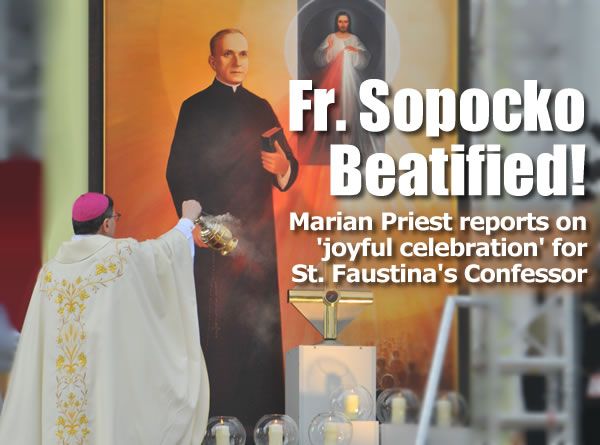
Blessed Father Sopocko

Father Sopocko Told Faustina: ‘Write a Diary’

Friday, February 15, 2013

The following is from Divine Mercy: A Guide from Genesis to Benedict XVI (Marian Press), by Robert Stackpole, STD. In this excerpt, Dr. Stackpole discusses the role played by the Rev. Michael Sopocko — St. Faustina’s confessor and spiritual director — in putting the Lord’s requests to Faustina into action. Father Sopocko was beatified Sept. 28, 2008. His feast day is Wednesday, Feb. 15. The more that Fr. Sopocko read St. Faustina’s Diary, as it flowed from her pen week by week, the more impressed he became by this message. However, he was still not entirely convinced of the authenticity of her revelations. After all, Fr. Sopocko was a well-trained theologian, and some of the things that Sr. Faustina wrote were so striking that he wondered whether they were entirely orthodox. First, Faustina claimed that Jesus had insisted that God is not only merciful to sinners — in fact, in a sense, He is even more merciful to sinners than to the just. Faustina wrote:

All grace flows from mercy … even if a person’s sins were as dark as night, God’s mercy is stronger than our misery. One thing alone is necessary: that the sinner set ajar the door of his heart, be it ever so little, to let in a ray of God’s merciful grace, and then God will do the rest (Diary, 1507).

Jesus said to her:

Let the greatest sinners place their trust in My mercy. They have the right before others to trust in the abyss of My mercy. … Souls that make an appeal to My mercy delight Me. To such souls I grant even more graces than they ask (Diary, 1146).

Clearly, the message of Christ to Sr. Faustina was a message of extravagant love: He said He pours out a veritable ocean of graces upon contrite souls who come to Him with trust — even more than they ask. In fact, He has a special compassion for the worst sinners, because they are most in need of His mercy. Jesus also promised to Sr. Faustina that the message of Divine Mercy, and its spread throughout the world, would be a harbinger of His Second Coming to the earth to bring the final triumph of the kingdom of God:

Speak to the world about My mercy; let all mankind recognize My unfathomable mercy. It is a sign for the end times; after it will come the day of justice. … You will prepare the world for My final coming (Diary, 848 and 429).

Jesus said all this not to frighten Faustina and those who would read these messages, but to convince them of the urgency of this evangelistic work of mercy. Jesus had promised in the Gospels that the good news of God’s merciful love would first be preached throughout the whole world before the end times would come (see Mk 13:9). The spread of The Divine Mercy message seems to play an important role in the fulfillment of that prophecy:

Today I am sending you with My mercy to the people of the whole world. I do not want to punish aching mankind, but I desire to heal it, pressing it to My merciful Heart. I use punishment when they themselves force me to do so; My hand is reluctant to take hold of the sword of justice. Before the Day of Justice, I am sending the Day of Mercy. … I am prolonging the time of mercy for the sake of [sinners]. But woe to them if they do not recognize this time of My visitation (Diary, 1588 and 1160).

In His messages to St. Faustina, Jesus elaborated on another prophecy He had made in the Gospels about the end times: the prophecy about the “sign” that would appear in the heavens just prior to His return (Mt 24:30). Jesus told her it would be a final sign of mercy for the world, a final call to repentance and forgiveness before the Day of Judgment:

Write this: Before I come as the just Judge, I am coming first as the King of Mercy. Before the day of justice arrives, there will be given to people a sign in the heavens of this sort: All light in the heavens will be extinguished, and there will be great darkness over the whole earth. Then the sign of the cross will be seen in the sky, and from the openings where the hands and the feet of the Savior were nailed will come forth great lights which will light up the earth for a period of time. This will take place shortly before the last day (Diary, 83).

Further, all of this should be considered in the broader scriptural context of how we will be judged on the Last Day, based on how we have shown mercy to others out of love for Jesus (see Mt 25:31-46). As Jesus told St. Faustina, “I demand from you deeds of mercy, which are to arise out of love for Me” (Diary, 742). Father Sopocko was most amazed, however, by one of our Lord’s messages to Sr. Faustina above all the others. Consequently, he made it the final testing-ground of the authenticity of all her revelations. This testing-ground was the claim that “mercy is the greatest attribute of God.” Jesus had actually said this to Faustina several times, but one time he said it in a message that was intended directly for Fr. Sopocko — which certainly made him pay close attention! Jesus said to her:

I desire that the first Sunday after Easter be the Feast of Mercy. Ask of my faithful servant [Fr. Sopocko] that on this day, he tell the whole world of My great mercy; that whoever approaches the Fount of Life on this day will be granted complete remission of sins and punishment. Mankind will not have peace until it turns with trust to My mercy. … My Heart rejoices in this title of Mercy. Proclaim that mercy is the greatest attribute of God. All the works of My hands are crowned with mercy (Diary, 300).

Father Sopocko’s response to this message is found in his own recollections, written some years later. He wrote:

There are truths of the faith which we are supposed to know and which we frequently refer to, but we do not understand them very well, nor do we live by them. It was so with me concerning the Divine Mercy. I had thought of this truth so many times in meditations, especially during retreats. I had spoken of it so often in sermons and repeated in the liturgical prayers, but I had not gone to the core of its substance and its significance for the spiritual life; in particular, I had not understood, and for the moment I could not even agree, that Divine Mercy is the highest attribute of God, the Creator, Redeemer, and Sanctifier. It was only when I encountered a simple holy soul who was in close communion with God, who, as I believe, with divine inspiration told me of it, that she impelled me to read, research, and reflect on this subject. … I began to search in the writings of the Fathers of the Church for a confirmation that this is the greatest of the attributes of God, as Sister Faustina had stated, for I had found nothing on this subject in the works of more modern theologians. I was very pleased to find similar statements in St. Fulgentius, St. Idelphonse, and more still in St. Thomas and St. Augustine, who, in commenting on the Psalms, had much to say on Divine Mercy, calling it the greatest of God’s greatest attributes. From then onwards, I had no serious doubts of the supernatural revelations of Sister Faustina (Tarnowska, p. 167, 201).

With all reasonable doubt removed, Fr. Sopocko began putting the Lord’s requests to Faustina into action. First, he commissioned an image of The Divine Mercy to be painted. Then, for the Sunday after Easter in 1935, he had this image displayed over the famous Ostra Brama gate to the city of Vilnius, and in the nearby church, he preached the message of mercy to the Catholic populace. Sister Faustina was given permission to be there, too. And toward the end of the service, when the priest took the Blessed Sacrament to bless the people, she saw the Lord Jesus Himself, as He is represented in the Image of Mercy, and Christ Himself gave His blessing while the rays from His Heart extended over the whole world. This event marked the beginning of the spread of the great devotion to The Divine Mercy, a devotion that is now having a profound impact upon the Church in our time. However, at first it did not spread rapidly. Rather, it spread slowly and steadily all over Poland, assisted by the grace of God in the hearts of the people. Father Sopocko saw very little of Sr. Faustina after that great exposition of the Image at the Ostra Brama gate. She remained in Vilnius for another year, but then she was transferred to Cracow. Nevertheless, she remained in contact with Fr. Sopocko, and continued to write her Diary: not so much for him, but as Jesus said, she was to be the “apostle” and “secretary” of His mercy for the whole world. Sister Faustina lived for only two more years. Her body was gradually ravaged by tuberculosis, and she was not spared any of the terrible sufferings caused by that disease in its final stages. The last chapter in her life became one of extreme suffering. She offered up all her sufferings in union with Christ’s Passion for mercy upon all lost sinners, and especially those near death. She prayed: “Transform me into Yourself, O Jesus, that I may be a living sacrifice, and pleasing to You. I desire to atone at each moment for poor sinners” (Diary, 908). And Jesus responded to her prayers:

Know, my daughter, that your silent, day-to-day martyrdom in complete submission to My will ushers many souls into heaven. And when it seems to you that your suffering exceeds your strength contemplate My wounds (Diary, 1184).

Father Sopocko visited her in late September 1938, just 10 days before she died. He always brought her news of the printing and dissemination of the Image, and of the spread of the devotion. But this time she had very little to say. As he later recalled, she was just too busy “communing with her heavenly Father.” Sister Faustina died on October 5, 1938, but her mission was far from over. In fact, it was only just beginning. “My mission will not come to an end upon my death,” she had said in her Diary, “[for] I will draw aside for you the veils of heaven to convince you of God’s goodness” (281).

+ + + Robert Stackpole, STD, is director of the John Paul II Institute of Divine Mercy. You can order Divine Mercy: A Guide from Genesis to Benedict XVI (Marian Press) through our online gift shop.
 

Permanent link to this article: https://luisapiccarreta.com/41-blessed-father-michael-sopocko-st-faustinas-confessor-and-spiritual-director/

3/30 Luisa’s Prayer: “O Jesus, by Your Infinite Mercy, make me holy!”

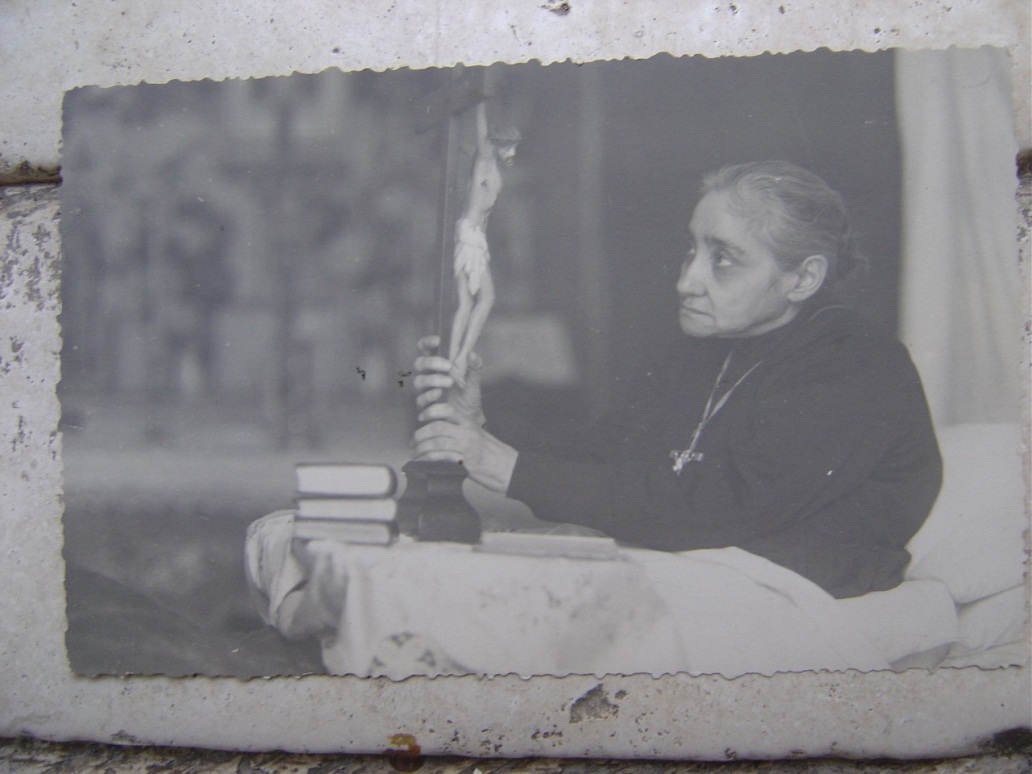
LUISA PRAYING BEFORE THE CRUCIFIX

YEARNINGS FOR SANCTITY

 By Luisa Piccarreta, the Little Daughter of the Divine Will At the beginning of her mystical life

 Introductory Note

These “Yearnings”, ardent prayer filled with longing and trust, were dictated by Luisa to a soul by the name of Rosa, who would go  to Luisa’s home to learn the art of embroidery at the tombolo, and was a little disciple of Luisa.  Each soul who yearns to live in the Divine Will, the Sanctity of sanctities, is a little Rose, who longs for Living Water – Sanctity in the Will of her Jesus. 

 My most sweet Jesus, my Delight and my Life, O please! by your Mercy, make me holy!  I pray You, O Jesus, for the sake of each beat of your adorable Heart, make me holy.  This is really about your Glory, the loving purpose of your Passion, of your most ardent yearning.  If I am saved, will there perhaps not be in Heaven one more soul that sings your praises for eternity?  Oh! make me holy then!  O my Jesus, make me holy!

I am a member of that Spouse of Yours, the Church, whom You purchased with your Divine Blood.  O please, do not suffer in Her a bad daughter like me, poor one; but for love of your Church, make me holy, O my God….

I come often to unite myself to You, ineffably, in that Divine Sacrament of Yours, which is called the Bread of Angels, and the Testament of your Love.  O please, do not suffer in me any stain or tepidness, but for love of your Flesh and of your Divine Blood, make me holy, O my God.

 O Jesus, by your infinite Mercy, make me holy!

 You demand of me to edify my family, my neighbor, my friends; You ask that I make virtue loved, that I draw souls to You.  And how can I ever make it, poor as I am, so lacking in fervor, humility and patience?  O please, for love of those souls, at least, who cost blood to your Heart, make me holy, O my God, make me holy.

But what need do I have to present to You so many reasons?  Are You not infinite Goodness and Generosity?  Could You, O beloved of my soul, allow that a daughter of yours, who opens her heart to You, entrusts to You her yearnings, asks You only that she may be holy, would remain prostrated before You without answering her?  Would You not listen to her in the greatness of your Mercy?

And even when, because of my constant ingratitude, You would want to reject me, could You deny this grace to your Blessed Mother Mary and mine, who asks You for it on my behalf, presenting all of Her compassion for your sorrows?  Could You deny it to my Guardian Angel, who continually offers You His celestial adorations in order to obtain it for me? 

 O Jesus, by your infinite Mercy, make me holy!

 O my Jesus, I confess myself unworthy of any favor, but when I ask You that I may be holy, what do I ask of You, after all, other than that the designs of your Redemption be fulfilled in me, and that your goodness may triumph in my malice, in my rejections and in my reluctance?

O my Love, You are Omnipotent – set me afire, burn me to ashes, consume me in your flames, let it be that I may never again offend You!  That I may die to myself; that I may make of this little while of my life that is left one single act of expiation, of gratitude, of adoration and of apostolate – one single act of immolation and of most pure love.  O Jesus, may I live all absorbed in You, drawn and genuflected with my spirit, always before your Sacramental Majesty.  Even more, may I, O Jesus, truly live of your very Sacramental Eucharistic Life, which is all an affable mystery of hiddenness, of operosity and of love.   

  O Jesus, by your infinite Mercy, make me holy!

 I know… I must do violence to myself in many motions of my spirit, and conquer myself in a thousand ways, on a thousand occasions….

I will need to love prayer, silence, work, mortification.

I will need to operate always and in everything with a live spirit of Faith and of holy fear of God.

I will need to make space, empty of every creature, around me and inside of me.

I will need to keep my heart always up high, keeping it immaculate, adorning it with lilies, with roses, with violets and with hyacinths….

But what is ever impossible for love?  O please! You Yourself, O Lord, make me comprehend how easily I can become holy, if only I embrace with love that daily cross which your love offers me; if only I do, as best I can, the daily actions which duty or charity require of me.

Oh, how sublime it is to become inebriated with pain out of love….  How perfect it turns out to be doing everything with a most pure intention, under the most holy gaze of my God, and in union with my Guardian Angel, as if I were to do that action alone; as if, after that one, I were to appear before the Divine Judgment – as if from it alone depended my eternal salvation.

  O Jesus, by your infinite Mercy, make me holy!

 Instruct me, You Yourself, O my Jesus, like a patient Teacher.  Make me – I pray You with St. Thomas – to be without reluctances in my humility, without dissipation in my joys, without disheartenments in my sadnesses, without inconstancy in my piety, without bitterness in my conversations, without laments in my sufferings, without hesitation in my obedience, without preferences in my charity, without artifice in my virtue.

Teach me – I will say to You with Saint Ignatius – to be generous unto heroism, to serve unto sacrifice, to give without measuring, to fight without being afraid of the wounds, to consume myself without lamenting.

 O Jesus, by your infinite Mercy, make me holy!

 O my Love, who will give me enough to repay You and to satisfy You if not Yourself?  O please, reign, You alone, in this heart of mine, so meager.  May I love You alone, O Jesus, and may I love You equally, when your love caresses me and when it scourges me.  May my spirit rest in You alone, O Jesus.  And when the whirlwind of my passions or the breath of your tests put my soul in agitation, even then, let it be, O Jesus, that each beat of my heart be a praise, a thanksgiving, an adoration for your Divine Heart.  Let is be that, any tie being broken, I may once and for all make a generous leap, and immerse myself inside your Crucified Heart, divine center of charity, of zeal, of purity, of annihilation and of most perfect abnegation….

 O Jesus, by your infinite Mercy, make me holy!

 O Mary, Mother of sweet Hope and of beautiful Love, I hide myself in the pious shadow of your mantle.

Saint Joseph, my dear most perfect example of the highest sanctity, You be my singular protector, and my model in the interior life of holy sorrow and of holy love….

In the midst of your three Hearts, O Jesus, O Mary, O Joseph, I remain secure and will fear no more on my journey.

O Jesus, O Mary, O Joseph, make me holy, I implore You, O please, make me holy!

 O Jesus, by your infinite Mercy, make me holy!

 Fiat!


Permanent link to this article: https://luisapiccarreta.com/330-luisas-prayer-o-jesus-by-your-infinite-mercy-make-me-holy/

3/29 The Mass and the resurrection of our bodies to glory


Jesus Priest and Victim

HE IS RISEN INDEED

ALLEULUIA!


From Luisa in 1899, before she received the full understanding of  her mission to the Church and world in the Divine Will

Now, while seeing Jesus or the priest celebrating the Divine Sacrifice, Jesus would make me understand that in the Mass there is the whole depth of our sacrosanct religion.  Ah! yes, the Mass tells us everything and speaks to us about everything.  The Mass reminds us of our redemption; It speaks to us, step by step, of the pains that Jesus suffered for us; It also manifests to us His immense love, for He was not just content with dying on the Cross, but He wanted to continue His state of victim in the Most Holy Eucharist. 

The Mass also tells us that our bodies, decayed, reduced to ashes by death, will rise again on the day of the judgment, together with Christ, to immortal and glorious life.  Jesus made me comprehend that the most consoling thing for a Christian, and the highest and most sublime mysteries of our holy religion are:  Jesus in the Sacrament and the resurrection of our bodies to glory. 

These are profound mysteries, which we will comprehend only beyond the stars; but Jesus in the Sacrament makes us almost touch them with our own hands, in different ways.  First, His Resurrection; second, His state of annihilation under those species, though it is certain that Jesus is there present, alive and real.  Then, once those species are consumed, His real presence no longer exists.  And as the species are consecrated again, He comes again to assume His sacramental state. 

So, Jesus in the Sacrament reminds us of the resurrection of our bodies to glory:  just as Jesus, when His sacramental state ceases, resides in the womb of God, His Father, the same for us – when our lives cease, our souls go to make their dwelling in Heaven, in the womb of God, while our bodies are consumed.  So, it can be said that they will no longer exist; but then, with a prodigy of the omnipotence of God, our bodies will acquire new life, and uniting with the soul, will go together to enjoy the eternal beatitude.  Can there be anything more consoling for a human heart than the fact that not only the soul, but also the body will delight in the eternal contentments? 

It seems to me that, on that day, it will happen as when the sky is starry and the sun comes out.  What happens?  The sun, with its immense light, absorbs the stars and makes them disappear; yet the stars exist.  The sun is God, and all the blessed souls are stars; God, with His immense light, will absorb us all into Himself, in such a way that we will exist in God, and will swim in the immense sea of God.  Oh! how many things Jesus in the Sacrament tells us; but who can say them all?  Truly, I would be too long.  If the Lord allows it, I will reserve saying something else on other occasions.

Permanent link to this article: https://luisapiccarreta.com/329-the-mass-and-the-resurrection-of-our-bodies-to-glory/

3/29 The Sacrifices of Luisa

‘The Kingdom of The Divine Will in the midst of creatures.  Book of Heaven. The call of the creature to the Order, the Place and the Purpose for which he was created by God’

Mama Luisa 

How everything will be known of the sacrifices that Luisa has made in order to make the Divine Will known.

Our Lord Jesus Christ to the Servant of God, Luisa Piccarreta, The Little Daughter of the Divine Will

 VOLUME 24

 September 8, 1928

Interest of God in one who lives in His Divine Will. Example of the sun.  How everything will be known of the sacrifices that Luisa has made in order to make the Divine Will known.

 I was feeling oppressed because of the privation of my Beloved Jesus. Oh! how I would have wanted to take a leap into the Celestial Regions never to go out of them again, and so end it with these blessed privations of Him that make me live dying.  Ah! yes, if by His Goodness Jesus lets me reach His Fatherland, He will no longer be able to hide from me, nor will I ever again be without Him even for one instant.  “Therefore, hurry, my Love—let us end it once and for all with these privations of You, for I can take no more.”  And I felt so embittered that, more than sharp sword, it pierced my poor soul through.

Now, at that moment, my Beloved Jesus came out from within my interior and told me: “My daughter (Luisa), courage, don’t you (Luisa) know that Our interest in one who does My Will and lives in It is so great, that she is kept by Us as Our own thing, exclusively Ours, inseparable from Us?  Our Divine Volition is inseparable from Us, and as much as Its light spreads, the center of It is always within Us—symbolized by the light of the sun that, while expanding and extending over the whole earth, holding it in its own hand of light, never departs from its sphere, nor is the light divided or loses even one drop of light. 

“In fact, light is not separable, and if it could be divided, it would no longer be true light; therefore, the sun can say: ‘All the light is mine.’  The same for Us:  the light of Our Divine Will is interminable and inseparable, and It makes the soul in whom It reigns Our own and inseparable from Us. 

“So, since We keep her as Our own thing, it is Our interest to give honor to Ourselves, and to invest her so much with all of Our Divine Qualities, as to be able to say to all: ‘In this creature there is Divine Life, because the light of Our Fiat dominates.’  Therefore Our interest, that everything in her be holy, pure, beautiful, and that she be invested with Our Happiness—everything must give of Divine Will. 

“Just as the earth, when it is invested by the light of the sun, loses darkness and gives completely of light, in such a way that the light acts as queen, and dominating the earth, it makes itself the nourisher of it, communicating to it the life and the effects of the light; in the same way, Our Divine Will, when It reigns in the creature, dispels evils, puts to flight darkness, weaknesses, miseries, afflictions, and, as Queen, makes Itself nourisher of light, of strength, of Divine riches and of happiness. Therefore, for one who lives in Our Fiat, bitternesses, oppressions and everything that gives of human will, lose their place, because the light of Our Fiat tolerates nothing but what belongs to It. 

“And just as Our Divine Will takes all interest in the creature, as something that belongs to It, so does the creature lose all human interests and acquires all Divine interests. From this it can be seen whether My Divine Will reigns:  if she no longer feels any interest of her own; and if she does, it means that the soul does not possess all the fullness of My Fiat—there are still little voids empty of Its light, and therefore the human makes itself felt, and the soul comes to take on human interests.  Therefore, bitternesses, oppressions—out of your soul.  These are things that no longer belong to you (Luisa); to you(Luisa) belongs the light and everything that the light of My Will can possess.”

After this, I was thinking to myself: “How many sacrifices are needed for this Kingdom of the Fiat:  sacrifice of writing, sacrifice of rest and of sleep, sufferings, incessant prayers, continuous death to the human volition so that the Divine may have perennial life; and many other things that only Jesus knows.  And after all this, maybe nothing good will be seen—no glory to God.  Therefore, so many sacrifices without utility and without effects.” 

But while I was thinking of this, my always lovable Jesus came out from within my interior, and clasping me in His arms, told me: “My daughter (Luisa), what are you (Luisa) saying?  There is not one sacrifice you (Luisa) have made that will not have its value, its precious effects, because everything that is done in My Will, and to impetrate that It be known, acquires Divine Life and communicative virtue as its nature, in such a way as to communicate to others the Divine Life and the virtue it possesses; so much so, that everything you (Luisa) have done and suffered is present at this moment before God in impetrative act, to obtain that creatures dispose themselves, and that God concede a good so great.

“Then, when My Will becomes known and Its Kingdom is accomplished, all the words you (Luisa) have written, the night vigils, your incessant prayers, your rounds upon rounds in the work of Creation and Redemption, your long years of bed, your pains and sacrifices, will then shine like rays of the sun, like diamonds and precious stones of infinite value that, little by little, those who will have the great good of knowing My Will, and of living in Its Kingdom, will recognize. Even more, they will know that the foundations bejeweled, the factories raised, are cemented with the many sacrifices of the one to whom the mission of making known the Kingdom of My Will was entrusted. 

“Everything will be known in clear notes, also those who have contributed, who have directed you (Luisa), who have commanded you (Luisa) to write and have interested themselves with making known, with words or with writings, what regards My Divine Fiat. And this is nothing; all the good that those who will possess the Kingdom of My Fiat will do, the glory that they will give Me, will descend and ascend again into the ones who have been the origin and the cause of a good so great. 

“And even if you (Luisa) are in Heaven, the communicative virtue of My Will that has lived life in you (Luisa) on earth, will place you (Luisa) in communication; it will keep all the ways open between you (Luisa) and them. So, your life and everything you (Luisa) have done and suffered will be in their midst; and everything they will do will have its origin in you (Luisa), because one is the Divine Will of one and of the other.  And if you (Luisa) knew the glory, the contentments, the delights that will come to you (Luisa), you (Luisa) would love to sacrifice yourself more, so that My Will be known and dominate in the midst of creatures.”


Permanent link to this article: https://luisapiccarreta.com/329-the-sacrifices-of-luisa/

3/28 The Opening of the Cause for the Beatification of Luisa Piccarreta

3/28 – On March 28, 1994, Cardinal Felici’s letter declared that on the part of the Holy See there was no impediment to the opening of the Cause for the Beatification of Luisa Piccarreta

March 28, 1994 – Cardinal Felici’s letter from the Sacred Congregation of the Causes of the Saints to His Excellency Archbishop Carmelo Cassati.  The letter declared that on the part of the Holy See there was no impediment to opening the Cause for Luisa Piccarreta’s Beatification, and to therefore start the process.

November 20, 1994 – Feast of Christ the King: Archbishop Cassati officially opened the beatification cause of the Servant of God Luisa Piccarreta in the principal church of Corato, in the presence of a huge crowd of people, locals and foreigners.

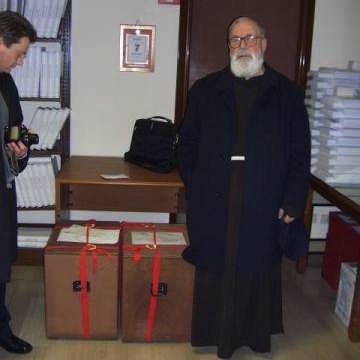
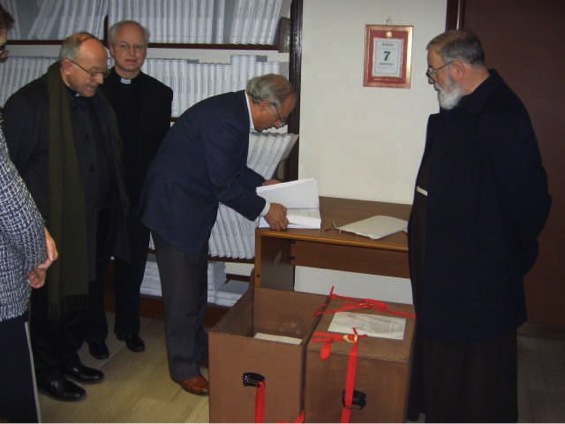
In October 2005 at the end of the closure of Luisa’s cause by the Archdiocese of Trani, all official documents were packaged and sealed for shipment to Congregation for the Causes of the Saints – The dicastery, or department, of the Roman Curia responsible to the Holy Father for the investigations which lead to the beatification and canonization of holy men and women. On March 7, 2006 those packages were officially opened by the Congregation for the Causes of the Saints. Thus began the “Roman Phase” of Luisa’s Cause.

Roman Phase

The Congregation for the Causes of the Saints appoints a Relator from among its College of Relators. His task is to supervise the writing of the Positio, a complete biography containing the evidence for or against the candidate. When completed the Positio is judged by the Congregation’s consultors, and then by a panel of theologians, whose vote determines whether the Positio is presented to the Cardinals of the Congregation for their vote. If the Cardinals approve, the Cause goes to the Pope, whose positive judgment on the Heroic Virtues of the Servant of God permits the person to be called Venerable. This Decree on the Heroic Virtues, together with a Decree approving a Miracle, permits the person’s Beatification.

On March 7, 2006, three days after the 59th anniversary of Luisa’s passage to Heaven, Luisa’s cause was officially opened in Rome. The official seals on the cases containing the documents from the Archdiocese of Trani were broken and the cases opened by the Congregation for the Causes of the Saints. In attendance were Padre Bernardino Bucci and the Vicar General of Trani Msgr. Savino Giannotti.

Mass Reading for March 7, 2006
Matthew 6: 7 – 15

7  “And in praying do not heap up empty phrases as the Gentiles do; for they think that
they will be heard for their many words.
8   Do not be like them, for your Father knows what you need before you ask him.
9   Pray then like this: Our Father who art in heaven, Hallowed be thy name.
10   Thy Kingdom come. Thy will be done, On earth as It is in heaven.
11   Give us this day our daily bread;
12   And forgive us our debts, As we also have forgiven our debtors;
13   And lead us not into temptation, But deliver us from evil.
14   For if you forgive men their trespasses, your heavenly Father also will forgive you;
15   but if you do not forgive men their trespasses, neither will your Father forgive your
trespasses.

Permanent link to this article: https://luisapiccarreta.com/328-the-opening-of-the-cause-for-the-beatification-of-luisa-piccarreta/