Accessibility Tools

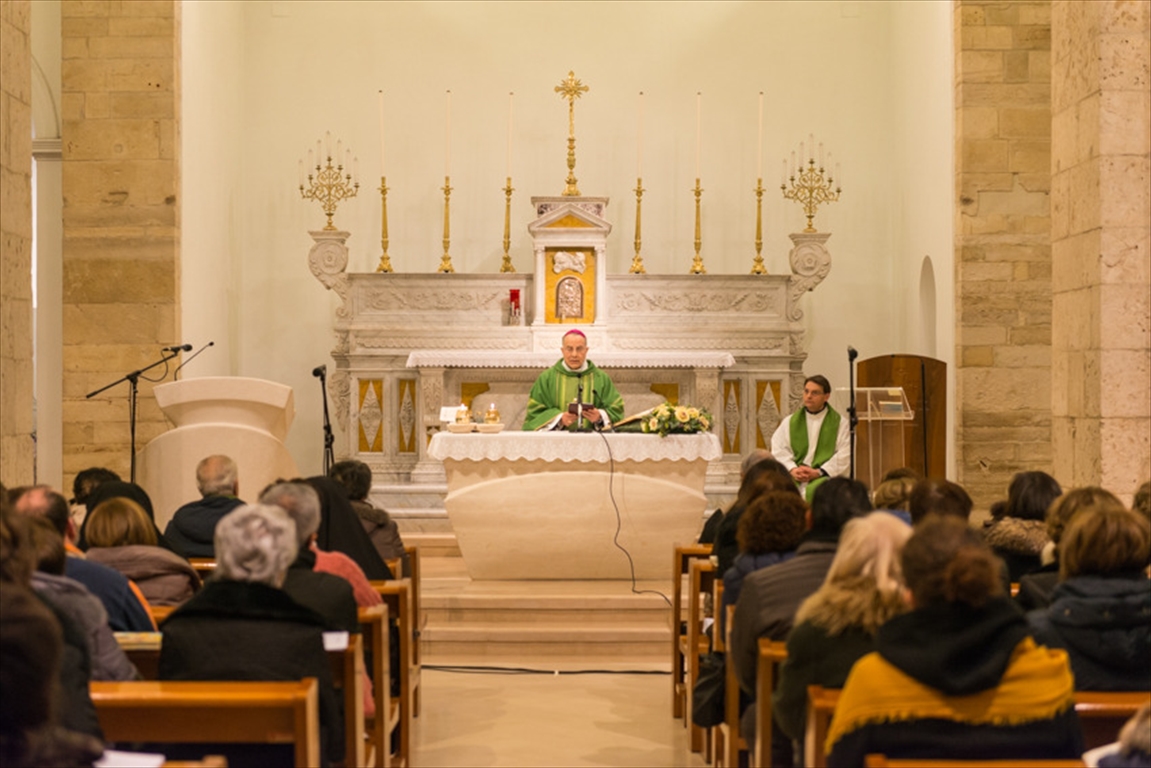
1/29 Homily of Archbishop Giovanni Battista Pichierri at Mass broadcast on Radio Maria January 23, 2017


Homily of Archbishop Giovanni Battista Pichierri at Mass broadcast on Radio Maria January 23, 2017

Click here for Official Website

The “Letter to the Hebrews” speaks to us of Jesus Christ, the only mediator of the new covenant  ” For this reason Christ is the mediator of a new covenant, that those who are called may receive the promised eternal inheritance—now that he has died as a ransom to set them free from the sins committed under the first covenant” (Hebrews 9:15).

Only Jesus Christ conquered death and gave us His divine life which is eternal.

He, as God, became like us  “to do away with sin by the sacrifice of himself” (Hebrews 9:26). “ So Christ was sacrificed once to take away the sins of many; and he will appear a second time, not to bear sin, but to bring salvation to those who are waiting for him” (Hebrews 9:28).

Unlike the priests of the Old Covenant, Jesus is both Priest and Victim. In His Passion He – as pure from every stain of sin –  gave himself to the Father for sinners. By means of His death and resurrection He accomplishes his priestly function; At the Ascension He didn’t enter into a temple built by human hands, but  He entered into heaven, where He remains a Lamb standing before the Father to make intercession for us (Rev 5:6).  Sin is  now deprived of  its strength  and  a “new way” to return to the Father is open to everyone.

The Gospel of Mark presents Jesus as the One before whom we must take a stand: either we join ourselves to Him, our only Savior or we compare ourselves to Him in the exercise of our freedom that rejects Him.

Salvation is a gift, but it can be given only to those who have the desire to be saved.

The servant of God “Luisa Piccarreta” had the desire to be saved. For this she fully adhered to the will of Jesus, obedient servant to the Father even unto death, even the death of the cross. In the Hours of the Passion Luisa comments on the agony of Gethsemane in the following way: “O Jesus, all the rebellions of creatures advance toward You; You see that “Fiat Voluntas Tua”, that “Your Will be done”, which was to be the life of each creature, being rejected by almost all of them, and instead of finding life, they find death. And wanting to give life to all, and make a solemn reparation to the Father for the rebellions of creatures, as many as three times, You repeat: “Father, if it be possible, let this chalice pass from Me: that souls, withdrawing from Our Will, become lost. This chalice is very bitter for Me; however, not my will, but Yours be done”.

Jesus bound the human will with the divine will making His own person a bridge, a bond of harmony. And this is precisely the starting point of our new life, to be in Christ, with Christ, through Christ.

In another excerpt from the Hours of the Passion Jesus tells Luisa: My daughter, do you want to know what it is that torments Me more than the very executioners? Rather, those are nothing compared to this! It is the Eternal Love, which, wanting primacy in everything, is making Me suffer, all at once and in the most intimate parts, what the executioners will make Me suffer little by little. Ah, daughter, it is Love which prevails in everything, over Me and within Me. Love is nail for Me, Love is scourge, Love is crown of thorns – Love is everything for Me. Love is my perennial passion, while that of men is in time. Ah, my daughter enter into my Heart, come to be dissolved in my love, and only in my love will you comprehend how much I suffered and how much I loved you, and you will learn to love Me and to suffer only out of love.”

Luisa lived immersed in the love of Jesus Christ and learned to love God and her neighbor, declaring herself the ‘little daughter of the Divine Will “.

Dearly beloved, it’s really a gift to know and love Jesus as the Servant of God Luisa Piccarreta did. Let us imitate her harmonizing our day in this way: “Today, in your Divine Will, come Jesus to love in me the people I meet, to walk in my steps,  to look with my eyes, to work in my hands,  to talk in my words , etc “.

Jesus made this possible by giving us His Divine Life.

Amen

Permanent link to this article: https://luisapiccarreta.com/129-homily-of-archbishop-giovanni-battista-pichierri-at-mass-broadcast-on-radio-maria-january-23-2017/

1/26 Archbishop Giovan Battista Pichierri Celebrates the 26th Anniversary of His Episcopal Ordination


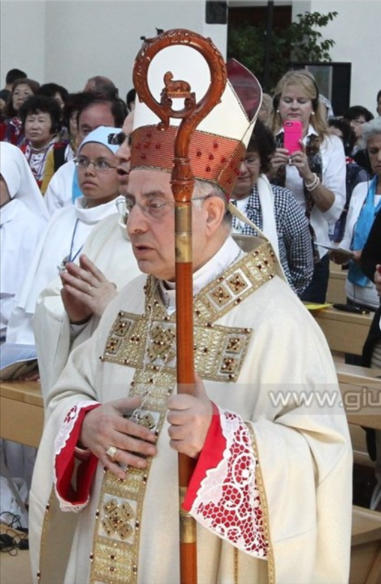
1/26 Archbishop Giovan Battista Pichierri celebrates the 26th anniversary of his Episcopal ordination.\

Wishing Archbishop Giovan Battista Pichierri a Blessed 26th Anniversary today!

Archbishop Pichierri 2016

Posted 1/23/16 on the Official Website for the Servant of God Luisa Piccarreta
On the Occasion of the 25th Anniversary

Dear friends,

January 26, our Archbishop Giovan Battista Pichierri will celebrates the 25th anniversary of his Episcopal ordination.

The Association “Luisa Piccarreta –  Little Children of the Divine Will”, on the occasion of this anniversary, wants to express with all of you, dear friends, who follow us on this website, best wishes to His Excellency, thanking him for his Episcopal ministry bestowed upon the Diocese of Trani-Barletta- Bisceglie, Titular of Nazareth, especially for his dedication during these years to the cause of Beatification of Luisa.

The Association sees in Mons. Pichierri its own father in faith who accompanies and stimulates it continuously, so that, first of all, it can live and testify of the gift of living in the Divine Will.

His numerous visits to the Association and his ongoing commitment to promote the cause of  beatification and canonization are a sign of his bond with the figure of Luisa, daughter of this land of Puglia who the Lord has chosen as a humble instrument to make known the Gift of Living in the Divine Will throughout the world.

Let us not forget that it was Mons. Pichierri who on October 29, 2005, in the presence of thousands of people from around the world, closed the diocesan inquiry into the life, virtue and reputation of Sanctity of the Servant of God Luisa Piccarreta.

Mons. Giovan Battista Pichierri was born in Sava  (province of Taranto) on February 12, 1943.

After concluding his studies at the diocesan seminary and then at the regional seminary in Molfetta, he was ordained a priest of the Diocese of Oria (Brindisi province) on August 30, 1967.

He completed his theological education by attending the Ecumenical Faculty of Bari, where in 1970 he obtained his license in Ecumenical Theology.

He put the first ten years of his priestly ministry at the service of the regional and diocesan minor seminaries for the High School in Taranto.

Here, he served at first as educator and then as rector.

After returning to the diocese in 1977, he served the diocesan Church working directly with Bishops De Giorgi (now Cardinal and Archbishop Emeritus of Palermo) and Franco and in the range of the sequence between them as “Delegate ad omnia” of Apostolic Administrator Voto, Bishop of Castellaneta.

Since 1982, he was appointed Archpriest by Mons. Armando Franco, and was entrusted with the pastoral care of the parish of SS. Trinity in Manduria, where he carried out his service until March12 1991.

In 1986,  Mons. Franco himself called him to collaborate more directly in the guide of diocese entrusting him with the role of Vicar General and Moderator of the Curia, in addition to that of pastor.

Throughout the years of his ministry he taught Catholic religion in public primary and lower secondary school, in the Lyceum and commercial and technical institutes. 

On December 21, 1990 the Holy Father John Paul II  appointed him Bishop of the diocese of Cerignola-Ascoli Satriano (Foggia Province).

On January 26,  1991 he was ordained Bishop in the Cathedral Church of Manduria by the Bishop of the diocese, Mons. Armando Franco.

On  March 17, 1991 he entered the diocese.

On November 13, 1999 the Holy Father John Paul II transferred him to the Archdiocese of Trani-Barletta-Bisceglie.

He was installed in it on Jan. 26, 2000, on the ninth anniversary of this Episcopal ordination.

We are grateful to the Lord because the ministry of our Archbishop has been “to testify to the gospel of God’s grace”, as the Acts of the Apostles – Chapter 20, 24 – remind us. Just as his predecessors did consistently with Luisa at first and then with the Association, he has kept the seal of the ecclesial spirit on this small seed destined to bear the fruit of the Kingdom.

 Associazione Luisa Piccarreta

Permanent link to this article: https://luisapiccarreta.com/126-archbishop-giovan-battista-pichierri-celebrates-the-26th-anniversary-of-his-episcopal-ordination/

1/23 DAY OF PRAYER FOR THE LEGAL PROTECTION OF UNBORN CHILDREN

1/23 Day of Prayer for the Legal Protection of Unborn Children

Book of Heaven
6/9/99 – Vol. 2

The very grave sin of abortion. Union of sufferings and of prayers.

I spent this morning very anguished because of the many offenses which I saw Him receive from men, especially because of certain horrendous dishonesties. How much the loss of souls grieved Jesus! More so, since it was a newborn baby that they were going to kill, without administering holy baptism to him. It seems to me that this sin weighs so much on the scale of Divine Justice, that it is the one that most cries out for revenge before God. Yet, these sorrowful scenes are renewed so very often. My most sweet Jesus was so afflicted as to arouse pity. Seeing Him in such a state, I did not dare to tell Him anything, and Jesus just told me: “My daughter, unite your sufferings to Mine, your prayers to Mine, so that they may be more acceptable before the majesty of God, and may appear not as your things, but as my own works.” Then He continued to make Himself seen other times, but always in silence. May the Lord be always blessed.

Posted in The Divine Will of God

Permanent link to this article: https://luisapiccarreta.com/123-day-of-prayer-for-the-legal-protection-of-unborn-children/

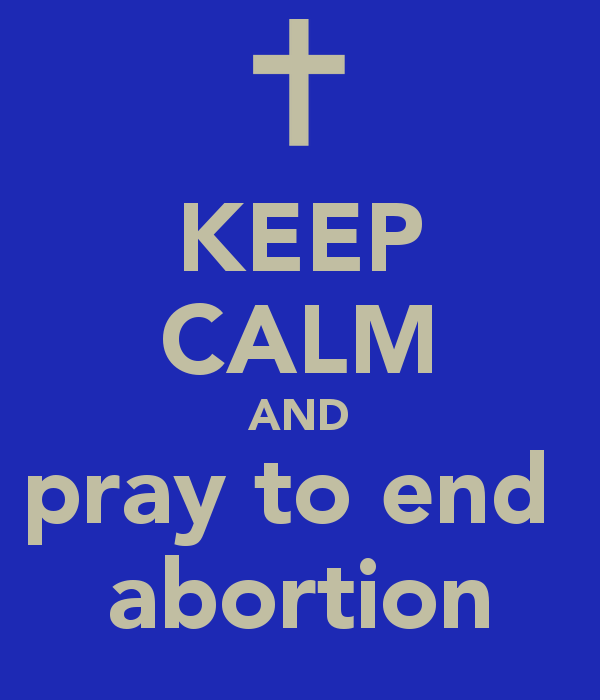
1/22 KEEP CALM AND PRAY FOR THE END OF ABORTION


1/23 Prayer for the End of Abortion

January 22, marks the 44th anniversary of Roe v. Wade,

the Supreme Court decision that made abortion legal in the U.S.

  Pray the Command Prayer to End Abortion:

Abba Father, in the Name of Jesus

In the Unity and Power of the Holy Spirit

Under the Mantle of Mary,

with all the Angels and Saints,

through the intercession of the Servant of God Luisa Piccarreta

take my humble prayer and make it Your Command

to end abortion throughout the world

that all may be accomplished and completed in Your Most Holy Divine Will.

Fiat!

Amen.

Since that tragic decision,

more than 59 million

children’s lives have been lost to abortion,

and many others suffer from that loss

— often in silence.

Posted in The Divine Will of God

1/22 The Dignity of the Human Person: Pope St. John Paul II’s Teaching on Divinization in the Trinitarian Encyclicals


By Carl E. Olson
Originally published in Saint Austin Review in 2002. 

A witness to the horrors of Nazism and Communism, Pope John Paul II saw first-hand the physical and spiritual destruction wrought by the disordered desire to remove God and make man the center and meaning of history. He has also observed destructive impulses in the West, falsehoods evidenced by the steady growth of abortion, contraception, amorality, and hedonism during the past several decades. In addressing all of these conditions, the Holy Father has consistently pointed out that man, in his confused search for identity and meaning, unwittingly proves he does indeed have a purpose and reason for living. The yearning of man, so often realized in distorted and ugly ways, is to be God and to be deified.John Paul II denounces the many perverted forms this yearning takes, but acknowledges its authentic core. Man has a God-made hole in his being, a deep recess which can only be fulfilled in one Way and by one Person, Jesus Christ. In the Incarnation, God united himself to man, making possible the unthinkable: intimate communion between the creature and the Creator. “This union of Christ with man is in itself a mystery,” the Holy Father states in his first encyclical, Redemptor Hominis, “From the mystery is born ‘the new man,’ called to become a partaker of God’s life, and newly created in Christ for the fullness of grace and truth.” (RH 18.2).This “partaking” of God’s very life (see 2 Peter 1:4) is the reality of divinization, or deification. In the Eastern Churches it is often called theosis; it is a central focus of Eastern Christian theology and worship. It is also one of the consistent and unifying themes of John Paul II’s thought, appearing often in his important trilogy of Trinitarian encyclicals – Redemptor HominisDives in Misericordia and Dominum et Vivificantem – respectively on the Son, the Father, and the Holy Spirit.At times acknowledging his debt to Eastern sources, John Paul II writes with profundity and insight about the reality of divinization. In the Trinitarian trilogy (and elsewhere) he addresses four key features of this vital doctrine: divinization, the adoption of man into God’s family, reveals the inherent dignity of man; it is possible only through the central mystery of the Incarnation; the Redemption is the concrete way in which the Incarnate One paved the way for man’s divinization; and the divine grace, given to man is the inner life and love of the Triune God and comes to man through the Mystical Body of Christ, the Church.God’s Family is For The Person

The anthropological focus of the Holy Father is an essential element of his thought, reflecting his use of the phenomenological method. Man, created in the image of God, has a unique, inherent value. It was always God’s plan that men, despite being creatures, would freely participate in his inner life. In Dominum et Vivificantem John Paul II writes:

[God] has revealed to man that, as the “image and likeness” of his Creator, he is called to participate in truth and love. This participation means a life in union with God, who is”eternal life.” (DeV 37.1)

The dignity and value of humanity is established in Creation, but is fully realized and expressed in the invitation to become a “new creature” in Christ (2 Cor. 5:17). In Redemptor Hominis, the Pope writes,

…we can and must immediately reach and display to the world our unity in proclaiming the mystery of Christ, in revealing the divine dimension and also the human dimension of the Redemption, and in struggling with unwearying perseverance for the dignity that each human being has reached and can continually reach in Christ, namely the dignity of both the grace of divine adoption and the inner truth of humanity… (RH 11.4).

The Holy Father returns to this understanding of dignity many times, using the word with a profound intent. Man’s dignity is not rooted in his temporal existence, but in where he has come from and where he is called to go. This calling is found in the revelation of Christ. In his writings, the Pontiff refers often to a phrase in

Gaudium et spes: “Christ, the new Adam, in the very revelation of the mystery of the Father and his love, fully reveals man to himself and brings to light his most high calling” (GS 22, quoted in RH 8.2).

If man had no value in the eyes of God, Christ would not have come and taken on flesh and died. So man’s dignity rests in the Redemption and within the salvific economy man becomes a “new creature”: “In this dimension man finds again the greatness, dignity and value that belong to his humanity. In the mystery of the Redemption man becomes newly ‘expressed’ and, in a way, is newly created” (RH 10.1).An error common to some theologians and (whether they realize it or not) secular humanists, is a fear the “new creation” brought by Christ involves a destructive or disrespectful attitude towards man’s nature. This can be seen in the classical Protestant notion of “total depravity.” But divine life and grace are not given to destroy man’s nature, but to perfect it, heal it, and bring it to full completion. Sin is destroyed, yet sin is not physical, or even “natural.”“He who is the ‘image of the invisible God’ (Col 1:15), is himself the perfect man who has restored in the children of Adam that likeness to God which had been disfigured ever since the first sin. Human nature, by the very fact that it was assumed, not absorbed, in him, has been raised in us also to a dignity beyond compare. For, by his Incarnation, he, the Son of God, in a certain way united himself with each man” (GS 22, quotes in RH 8.2).Yet while each man is united to Christ through the Incarnation, each must decide for himself what to do about the scandal of the Incarnation. God does not force his supernatural life upon man; such an act would obliterate man’s free will, an essential feature of human dignity. The dilemma for each person is this:“Will I enter into the life of Christ or not?” If not, divine life is lost and there is an eternal separation from the Source of life. If man chooses divine life, he is indwelt by the Holy Spirit, and enters into communion with God:The hidden breath of the divine Spirit enables the human spirit to open in its turn before the saving and sanctifying self-opening of God. Through the gift of grace, which comes from the Holy Spirit, man enters a “new life,” is brought into the supernatural reality of the divine life itself and becomes a “dwelling-place of the Holy Spirit,” a living temple of God…Man lives in and by God… (DeV 58.3).

God became Man to Grant Divine Life

In Redemptor Hominis, John Paul II refers to Christ as the “one who penetrated in a unique, unrepeatable way into the mystery of man and entered his ‘heart’” (RH 8.2). When the mystery of man is met by the mystery of the Incarnation, they become unified: “For, by his Incarnation, he, the Son of God, in a certain way united himself with each man.” The Incarnation is the bridge spanning the gap between man and God. It is the ultimate expression – the final Word – of God’s merciful love.

In Dominum et Vivificantem the Holy Father writes of “God’s salvific self-communication” and “giving” (see DeV 11, 12, 13,14). He states this self-communication gives mankind “the capacity of having a personal relationship with God, as ‘I’ and ‘you,’ and therefore the capacity of having a covenant, which will take place in God’s salvific communication with man…” (DeV 34, see all of 34). This culminates in the Word, whose Incarnate entrance into history “constitutes the climax of this giving, this divine self-communication” (DeV 50.1).The Incarnation and man’s divinization should be seen as part of a familial reality. Just as the Father sent his only begotten Son (Jn 3:16, Heb 1:5), the Son in turn sends forth adopted sons (Gal 4:4-7). Just as the Son came to do the will of the Father (Lk 22:42, Jn 4:34), adopted sons go forth to do the will of the Son (Jn 15:14-17). This spiritual procreation occurs by the power of the Holy Spirit, the giver of life (2 Cor 3:6, Gal 6:8). John Paul II writes:For as Saint Paul teaches, “all who are led by the Spirit of God” are “children of God.” The filiation of divine adoption is born in man on the basis of the mystery of the Incarnation, therefore through Christ the eternal Son. But the birth, or rebirth, happens when God the Father “sends the Spirit of his Son into our hearts.” Then we receive a spirit of adopted sons by which we cry ‘Abba, Father!’” Hence the divine filiation planted in the human soul through sanctifying grace is the work of the Holy Spirit. “It is the Spirit himself bearing witness with our spirit that we are children of God, and if children, then heirs, heirs of God and fellow heirs with Christ.” Sanctifying grace is the principle and source of man’s new life: divine, supernatural life. (DeV 52.2).By entering into human history and uniting Himself with mankind, God not only restored communion between the divine and the natural, He modeled divine sonship for us. By becoming united to humanity, he demonstrated that man can become one with God. Man can become by grace what the Son is by nature. Put another way, the Son of God became a Son of Man so that men might become sons of God (see CCC 460).
In Dominum et Vivificantem, the Holy Father meditates upon the unique relationship between the Incarnation, the Holy Spirit, and divinization. Christ told the apostles he must go in order for the Helper, the Paraclete, to be sent (Jn 16:7). Throughout his encyclical on the Holy Spirit, John Paul II reflects on the role of the Paraclete as the communicator of the divine life which comes through the Incarnation:Thus there is a supernatural “adoption,” of which the source is the Holy Spirit, love and gift. As such he is given to man. And in the superabundance of the uncreated gift there begins in the heart of all human beings that particular created gift whereby they “become partakers of the divine nature.” Thus human life becomes permeated, through participation, by the divine life, and itself acquires a divine, supernatural dimension. There is granted the new life, in which as a sharer in the mystery of the Incarnation “man has access to the Father in the Holy Spirit.” (DeV 52.3).Redemption and the Divine LifeThe opening sentence of Redemptor Hominis squarely places the Redeemer and Redemption at the center of history, reality, and salvation. The scandal of the Redemption, the death of God on a cross, is the climax of the greatest scandal, the birth of God in time and space. It is also the revelation of the greatest love known to man. “In the mystery of the Cross love is at work, that love which brings man back again to share in the life that is in God himself” (DeV 41.1), and “It is love which not only created the good but also grants participation in the very life of God: Father, Son, and Holy Spirit” (DM 7.4). In a beautiful passage in Dives in Misericordia, the Holy Father summarizes the relationship between the redemptive work of Christ and divinization:

The Cross of Christ on Calvary stands beside the path of that admirable commercium, of that wonderful self-communication of God to man, which also includes the call to man to share in the divine life by giving himself, and with himself the whole visible world, to God, and like an adopted son to become a sharer in the truth and love which is in God and proceeds from God. It is precisely besides the path of man’s eternal election to the dignity of being an adopted child of God that there stands in history the Cross of Christ, the only-begotten Son… (DM 7.5)

The call to divine life is the call to die to self, and to take up the cross of Christ. One does not experience the divine life of Christ without also experiencing the death of Christ (Rom 6:5-11). Again, this death does not disparage the body or human nature, but is a just condemnation of sin and man’s disordered appetites. The Redemption, and through it divinization, is oriented towards the whole man. Men are both physical and spiritual beings whose entire person yearns and groans for the eschaton (Rom 8:22), when all will be made right between God and his creation.

The Inner Life and Love of the Triune God

Another reocurring element in the writings of John Paul II is the Trinitarian formula. Throughout his encyclicals there is a repeated use of the phrase “to the Father, through the Son, in the Holy Spirit.” In writing about divinization, John Paul II highlights the particular actions of the three Persons, always balancing this with the unity of the Trinity. In Redemptor Hominis, regarding the Church as a “sign” and “sacrament, he writes:

This invocation addressed to the Spirit to obtain the Spirit is really a constant self-insertion into the full magnitude of the mystery of the Redemption, in which Christ, united with the Father and with each man, continually communicates to the Spirit who places within us the sentiments of the Son and directs us towards the Father (RH 18.4).

Here the perfect relationship of the Trinity is expressed in terms of action and interaction: united, communicates, places and directs. The harmony and order of the Trinity does not limit or hinder the individual Persons, nor does the work of the Persons conflict with the unity of their single nature. The Son’s redemptive work unites us to himself, the Holy Spirit perfects our will and makes us more Christlike, and both guide us towards our heavenly Father. This is the path of divine growth and divine life, the joy of divinization Further on the Pope further elucidates the nuances of this path:

[T]he Father is the first source and the giver of life from the beginning. That new life, which involves the bodily glorification of the crucified Christ, became an efficacious sign of the new gift granted to the humanity, the gift of the Holy Spirit, through whom the divine life that the Father has in himself and gives to his Son is communicated to all mean who are united with Christ. (RH 20.1)

The Beatific Vision, the eternal joy of those who enter heaven, is participation in the intimacy of the Trinitarian life. While still on earth the believer possesses not only the objective knowledge of the reality of divine life, but also the sacraments, through which the life of the Trinity is given. In baptism we enter into relationship with the Father through the mystery of the Incarnation, by the life of the Son, and in the power of the Holy Spirit. In confirmation we receive additional grace and power from the Triune God. In the Eucharist we partake of the Redeemer’s flesh and blood and join with him in offering ourselves up to the Father, again in the Holy Spirit.

The Trinitarian formula, as John Paul II emphasizes in Dominum et Vivificantem, is not just words, but reality:The [Triune] formula reflects the intimate mystery of God, of the divine life, which is the Father, the Son and the Holy Spirit, the divine unity of the Trinity. The farewell discourse can be read as a special preparation for this Trinitarian formula, in which is expressed the life-giving power of the sacrament which brings about sharing in the Triune God, for it gives sanctifying grace as a supernatural gift to man. Through grace, man is called and made “capable” of sharing in the inscrutable life of God. (DeV 9).Divine Sonship in the Here and NowAccording to John Paul II, the reality of divinization should be clearly seen and demonstrated in the Church, which is Christ’s Mystical Body. Near the beginning of his pontificate he referred back to Lumen Gentium while writing of the union with God found in the Church.‘By her relationship with Christ, the Church is a kind of sacrament or sign and means of intimate union with God, and of the unity of all mankind [LG 1],’ and the source of this is he, he himself, he the Redeemer. (RH 7.3)

Within the Church there must be a growing understanding of the reality and the meaning of divine adoption. Without it there constantly exists the increased possibility of belief in “do-goodism” as a means of achieving heaven, as well as a distorted understanding of the Church, the liturgy and the sacraments. Each of these can only be understood and appreciated more fully when grasped in the context of divine sonship and the reality of God’s true Fatherhood. Divine adoption is the source of our oneness in Christ, the heart of our familial bond. This is clear in the teaching of our Holy Father:

This treasure of humanity enriched by the inexpressible mystery of divine filiation and by the grace of “adoption as sons” in the only Son of God, through whom we call God “Abba, Father” is also a powerful force unifying the Church above all inwardly and giving meaning to all her activity. (RH 18.3)

Carl E. Olson is the editor of IgnatiusInsight.com.
He is the co-author of The Da Vinci Hoax: Exposing the Errors in The Da Vinci Code and author of Will Catholics Be “Left Behind”? 
He resides in a top secret location in the Northwest somewhere between Portland, Oregon and Sacramento, California.

Permanent link to this article: https://luisapiccarreta.com/122-keep-calm-and-pray-for-the-end-of-abortion/

1/21 100 DAYS


100 Days

100 Days: 

Masses, Prayers and Fasting for Our New President,
Our Leaders and Our World in the Most Holy Divine Will

January 20 (Inauguration Day) – April 29, 2017
(Feast of St. Catherine of Siena)

In the Divine Will in the name of everyone and everything past, present and future in all the Masses, prayers and fasting for our future President, our Leaders and our Families so that the Kingdom of God may be established on earth as it is in Heaven.
We will attend the Holy Sacrifice of the Mass as often as we can and pray the Holy Rosary, the Divine Mercy Chaplet, Litany’s and other devotional prayers like the Precious Blood or Mary Undoer of Knots always in the Most Holy Divine Will especially with the Command Prayer.
The Children of America will then become what as Our Lady of America prophesized to Sr Mildred that they will bring Purity to the world. Our new President and those chosen to work alongside him need our continued support of prayers, fasting and Masses in the Most Holy Divine Will.
We will continue to pray in the Most Holy Divine Will to seek guidance from the Holy Spirit to bring  changes that shall prepare our nation and the world for the coming of the Kingdom of God on earth as it is in Heaven.

During these 100 Days continue to pray for our country in the Divine Will to:

defend the life of the unborn
select pro-life Supreme Court justices 
promote religious liberty

defend the sanctity of marriage and family life
and for the Kingdom of God to come on earth as it is in Heaven

Permanent link to this article: https://luisapiccarreta.com/121-100-days/