September 15, A.D. 2017 – Seven Sorrows of the Blessed Virgin Mary
Calendar for the Traditional Roman Rite
Devotion to the Sorrows of Mary has always been a favorite devotion among Catholics. It has been sanctioned by the Church and introduced into the Missal and Breviary. In order to keep before our minds the inexpressible sufferings endured for us by the Mother of God while she lived here on earth with her Divine Son, the Church observes two feasts in honor of the Seven Dolors of Mary; one on the Friday before Good Friday and the other on September 15.
She has enriched with numerous indulgences the Rosary of the Seven Dolors, as well as a number of other devotions to the Mother of Sorrows. How touching is the beautiful hymn, Stabat Mater Dolorosa, which the Church intertwines with the public recitation of the Way of the Cross. The Church spares no pain to induce her children to venerate the sufferings of their Heavenly Mother. Seven of her sorrows have been chosen for our special veneration. Holy Church recalls to our mind only seven of Our Lady’s Dolors, but who could form an estimate of their real number! The sufferings of the Mother of God cannot be comprehended; they are inconceivable. But although her whole life was, like that of her Divine Son, a continuous series of sufferings and tribulations, the greatest woes and trials came to her during the week of the bitter passion and death of Jesus, when the storm of hatred and fury burst forth with all violence against Him. The precise object of the devotion to Our Lady of Sorrows consists of a heartfeltand sincere compassion for the Sorrows which the most holy Virgin endured through her whole life, especially for her long martyrdom, which began with the prophecy of holy Simeon and was consummated on Calvary.
Devotion to the sorrows of Mary should be practiced especially by souls who wish to rid themselves of sinful habits. This devotion nourishes the spirit of compunction, affords great consolation, strengthens confidence in God’s mercy, draws down the special protection of the Blessed Mother in the hour of temptation and preserves the converted sinner from relapsing into sin. The Mother of God once said to her faithful servant St. Bridget: “No matter how numerous a person’s sins may be, if he turns to me with a sincere purpose of amendment, I am prepared forthwith to receive him graciously, for I do not regard the number of sins he has committed, but look only upon the dispositions with which he comes to me; for I feel no aversion in healing his wounds, because I am called and am in truth the Mother of Mercy.” One of the gifts granted to those who have a devotion to the Dolors of Mary is the grace of a good and holy death. In recompense for her fidelity in remaining near to Jesus as He died on the Cross, Our Lady of Sorrows has received from Him a special power to assist souls in their last agony and no doubt she will above all exercise this power in behalf of those who have wept with her and compassionated her.
Our Lord once said to Veronica of Binasco: “My daughter, the tears which you shed in compassion for My sufferings are pleasing to Me, but bear in mind that on account of My infinite love for My Mother, the tears you shed in compassion for her sufferings are still more precious.”
The prophecy of Simeon: “And Simeon blessed them, and said to Mary his mother: Behold this child is set for the fall and for the resurrection of many in Israel, and for a sign which shall be contradicted; And thy own soul a sword shall pierce, that out of many hearts thoughts may be revealed” (Luke II: 34-35).
The flight into Egypt: “And after they (the wise men) were departed, behold an angel of the Lord appeared in sleep to Joseph, saying: Arise and take the child and His mother and fly into Egypt: and be there until I shall tell thee. For it will come to pass that Herod will seek the child to destroy Him. Who arose and took the child and His mother by night, and retired into Egypt: and He was there until the death of Herod” (Matt. II: 13-14).
The loss of the Child Jesus in the temple: “And having fulfilled the days, when they returned, the Child Jesus
remained in Jerusalem; and His parents knew it not. And thinking that he was in the company, they came a day’s journey, and sought him among their kinsfolk and acquaintance. And not finding Him, they returned into Jerusalem, seeking Him” (Luke II: 43-45).
The meeting of Jesus and Mary on the Way of the Cross: “And there followed Him a great multitude of people, and of women, who bewailed and lamented Him” (Luke XXIII: 27).
The Crucifixion: “They crucified Him. Now there stood by the cross of Jesus, His Mother. When Jesus therefore had seen His Mother and the disciple standing whom he loved, He saith to His Mother: Woman: behold thy son. After that he saith to the disciple: Behold thy Mother” (John XIX: l8, 25-27).
The taking down of the Body of Jesus from the Cross: “Joseph of Arimathea, a noble counselor, came and went in boldly to Pilate, and begged the body of Jesus. And Joseph buying fine linen, and taking Him down, wrapped Him up in the fine linen” (Mark XV: 43-46).
The burial of Jesus: “Now there was in the place where He was crucified, a garden; and in the garden a new sepulcher, wherein no man yet had been laid. There, therefore, because of the parasceve of the Jews, they laid Jesus, because the sepulcher was nigh at hand” (John XIX: 41-42).
Feast of the Seven Sorrows of Mary
In the Kingdom of the Divine Will
From the Writings of
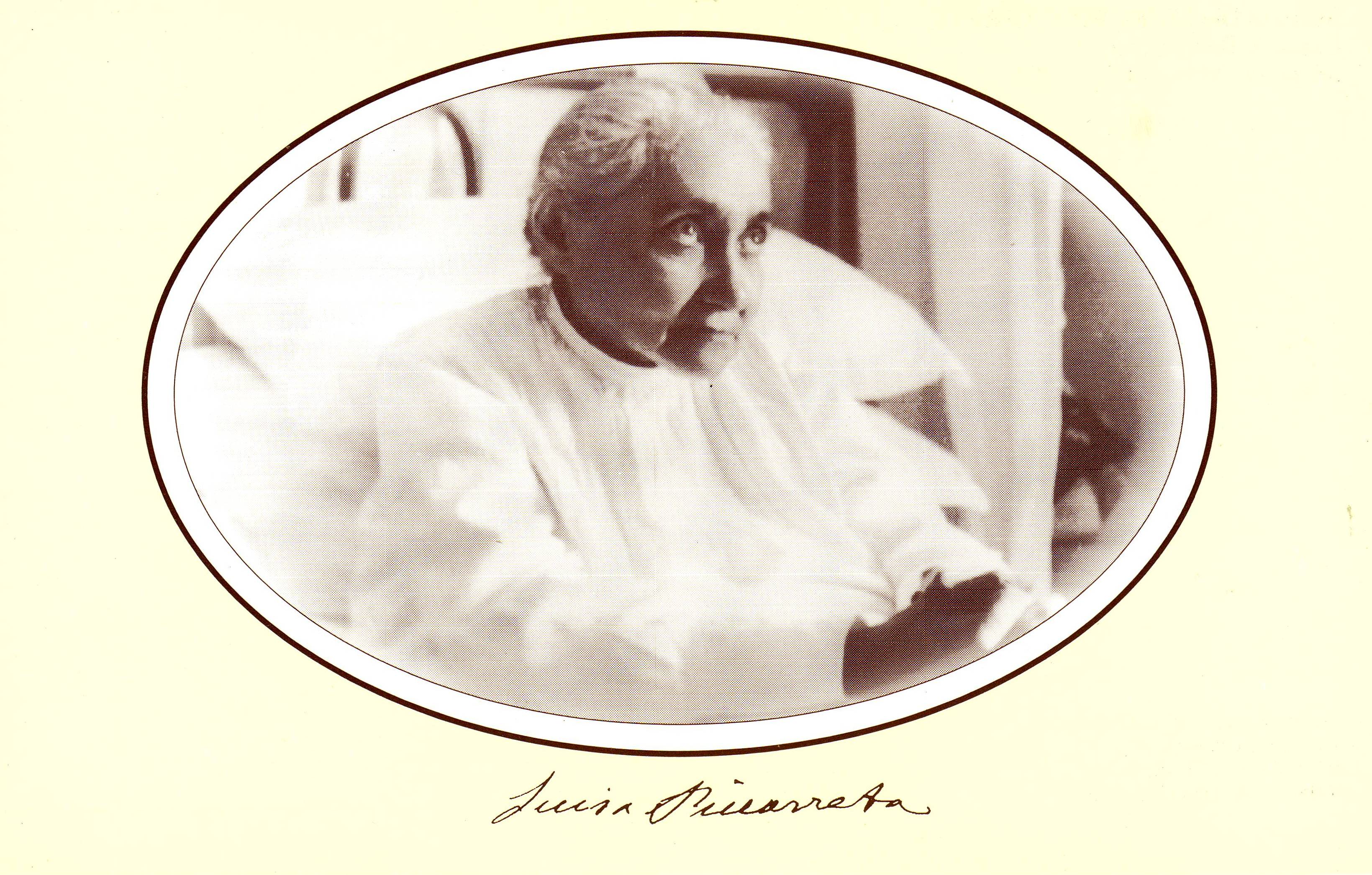
The Servant of God Luisa Piccarreta
The Little Daughter of the Divine Will
Feast of the Seven Dolors (Sorrows) of
the Blessed Virgin Mary
The seven dolors of the Blessed Virgin are the chief sorrowful events in the life of Our Blessed Lady. They are:
The circumcision of our Lord — when she saw his blood shed for the first time;
Her flight into Egypt — to save the life of the Infant Jesus, when Herod sought to kill Him;
The three days she lost her Son in Jerusalem;
When she saw him carrying the cross;
When she saw him die;
When His dead body was taken down from the cross;
When it was laid in the sepulchre or tomb.
First Sorrow – The circumcision of our Lord
Meditation 2 – The Queen of Heaven in the Kingdom of the Divine Will
Now, you must know that only eight days had passed from the birth of the Divine Infant. Everything was feast and happiness; the very Creation, taking a festive attitude, celebrated Its Baby Creator. But duty interrupted our joys, because in those times there was a law that all firstborn sons were to undergo the cruel cut of circumcision. My Heart of Mother bled with sorrow in having to submit my dear Son, my Life, my own Creator, to such a bitter pain. Oh, how I would have wanted to take His place! But the Supreme Volition imposed Itself on my love, and giving Me heroism, commanded Me to circumcise the Baby God. My child, you cannot comprehend how much it cost Me; but the Divine Fiat won, and I obeyed, united with Saint Joseph. In mutual agreement, we had my dear Son circumcised. At the painful cut, I felt my Heart being torn, and I cried. Saint Joseph cried too, and my dear Baby sobbed, and His pain was such that He shivered, and looking at me, He sought help. What an hour of pain and spasm for the three of us! It was such that, more than a sea, it engulfed all creatures, to bring them the first pledge and the very Life of my Son, to place them in safety. Now, blessed child, you must know that this cut enclosed profound mysteries: first, it was the seal that impressed in the little Humanity of the Celestial Baby His brotherhood with the whole human family; and the blood He shed was the first disbursement before Divine Justice in order to ransom all human generations. The dear Baby was innocent – He was not obliged by the law; but He wanted to submit Himself, first, to give the example; and then, to infuse trust and courage, saying to all: “Do not fear; I am your little brother, similar to you. Let us love one another, and I will place you all in safety. I will bring you all to my Celestial Father, as my dear brothers.” My child, what an example the Celestial Baby gives! He, Who is the Author of the law, obeys the law. He is born only eight days ago, yet He makes it a duty for Himself, submitting Himself to the cruel cut of circumcision; an indelible cut – as indelible as the union He came to form with degraded humanity. This says that sanctity is in doing one’s own duty, in the observance of the laws, and in fulfilling the Divine Will. Sanctity without duty does not exist. It is duty that places order, harmony, and the seal on sanctity.
Second Sorrow – Her flight into Egypt
Day Twenty-four – The Queen of Heaven in the Kingdom of the Divine Will.
My dearest child, today the Heart of your Mama is swollen with love and with sorrow, so much so, that I cannot refrain from crying. You know of the coming of the Magi Kings, who caused rumor in Jerusalem, asking about the new King. And cruel Herod, for fear of being removed from his throne, has already given the mandate to kill my sweet Jesus, my dear life, together with all the other children. My child, what pain! The One who has come to give life to all, and to bring into the world the new era of peace, of happiness, of grace…they want to kill Him! What ingratitude! What perfidy! Ah, my child, to what extent the blindness of the human will reaches! To the extent of becoming ferocious, of tying the hands of the Creator Himself, and of making itself the owner of the One who created it. Give Me your compassion, my child, and try to calm the crying of the sweet Baby. He cries because of human ingratitude, because, only a newborn, they want Him dead; and in order to save Him, we are forced to flee. Dear Saint Joseph has already been advised by the Angel to leave for a foreign land. Accompany us, dear child; do not leave us alone, and I will continue to give you my lessons on the great evils of the human will. Now, you must know that as man withdrew from the Divine Will, he broke off with his Creator. Everything on earth had been made by God for him – everything was his; but man, by not wanting to do the Divine Will, lost all rights, and one could say that he did not know where to place his foot. So He became a poor exiled one, a pilgrim who could not have a permanent residence; and this, not only for the soul, but also for the body. All things became mutable for poor man; and if he did possess any fleeting thing, it was by virtue of the foreseen merits of this Celestial Baby. This, because the whole magnificence of Creation was destined by God for all those who would do His Will and live in Its Kingdom. All others, if they manage to take anything, are the true petty thieves of their Creator; and with reason: they do not want to do the Divine Will, but they want the goods which belong to It? Now, dear child, listen to how much this dear Baby and I love you: at the first dawn of His life, He goes into exile, and into a foreign land, in order to free you from the exile in which your human will placed you; to call you to live, not in a foreign land, but in your fatherland – the Kingdom of the Supreme Fiat – which was given to you when you were created. Child of my Heart, have pity on the tears of your Mother, and on the tears of this sweet dear Baby – crying, We ask you never to do your will. But We beg you, We implore you: come back into the bosom of the Divine Will, which so much longs for you! Now, dear child, in the midst of the sorrow for human ingratitude, and in the midst of the immense joys and happinesses that the Divine Fiat gave us and the feast that all Creation made for the sweet Baby, the earth became green and flowery again under our steps, to give homage to its Creator. The sun fixed on Him, and praising Him with its light, it felt honored to give Him its light and heat. The wind caressed Him; the birds, almost like clouds, alighted around us, and with their trills and songs, made the most beautiful lullabies for the dear Baby, to calm His crying and favor His sleep. My child, since the Divine Will was in us, we had power over everything. So we arrived in Egypt, and after a long period of time, the Angel of the Lord told Saint Joseph that we should return to the house of Nazareth, because the cruel tyrant had died. So we repatriated to our homeland.
Now, Egypt symbolizes the human will – a land full of idols; and wherever Baby Jesus passed, He would knock down these idols and cast them into hell. How many idols does the human will possess! Idols of vainglory, of self-esteem and of passion, which tyrannize the poor creature! Therefore, be attentive; listen to your Mama. I would make any sacrifice never to let you do your will; and I would also lay down my life, to give you the great good of living always in the bosom of the Divine Will.
Third Sorrow – The three days she lost her Son in Jerusalem
Meditation 5 – The Queen of Heaven in the Kingdom of the Divine Will.
We continued to spend our lives in the quiet little house of Nazareth, and my dear Son grew in grace and in wisdom. He was charming because of the sweetness and the gentleness of His voice, the sweet enchantment of His eyes, and the loveliness of His whole person. Yes, my Son was truly beautiful, unsurpassingly beautiful! He had recently reached the age of twelve, when we went to Jerusalem according to custom, in order to solemnize the Passover. We set out on the journey – He, Saint Joseph and I. Very often, as we proceeded, with devotion and recollected, my Jesus would break the silence and speak to us now of His celestial Father, now of the immense love for souls which He felt in His Heart. Once in Jerusalem, we went directly to the temple, and as we arrived, we prostrated ourselves with our faces to the ground, adoring God profoundly, and praying for a long time. Our prayer was so fervent and recollected as to open the heavens, draw and bind the Celestial Father, and therefore hasten the reconciliation between Him and men. … After we had fulfilled our duty in the temple and celebrated the Passover, we prepared to return to Nazareth. In the confusion of the crowd, we were separated; I remained with the women, and Joseph joined the men. I looked around to see whether my Jesus had come with Me, but, not seeing Him, I thought He had remained with his father Joseph. But what was not the surprise and the concern I felt when, as we arrived at the place at which we were to reunite, I did not see Him at his side! Unaware of what had happened, we felt such fright and such pain that we both remained mute. Overcome with sorrow, we went back hurriedly, anxiously asking those whom we met: “O tell us if you have seen Jesus, our Son, for we can not live without Him!” Crying, we would describe His features: “He is all lovable; His beautiful azure eyes sparkle with light and speak to the heart; His gaze strikes, enraptures and binds; His forehead is majestic; His face is beautiful, of an enchanting beauty; His most sweet voice descends deep into the heart and sweetens all bitternesses; His hair, curly and like finest gold, renders Him striking and charming. All is majesty, dignity and sanctity in Him. He is the most beautiful among the sons of men!” But in spite of our searching, nobody was able to tell us anything. The sorrow I felt was so cruel as to make Me weep bitterly, opening, every instant, deep gashes in my soul, which caused Me true spasms of death. Dear child, if Jesus was my Son, He was also my God; therefore my sorrow was wholly within the divine order – that is, so powerful and immense as to surpass all other possible torments together. If the Fiat which I possessed had not sustained Me continuously with Its divine strength, I would have died of shock. Seeing that no one was able to give us information, I anxiously questioned the Angels who surrounded Me: “But, tell Me, where is my beloved Jesus? Where should I direct my steps in order to find Him? O, tell Him I can bear no more; bring Him into my arms on your wings! My Angels, have pity on my tears, help Me – bring Me Jesus!” In the meantime, as every search had turned out in vain, we returned to Jerusalem. After three days of most bitter sighs, tears, anxieties and fears, we entered the temple. I was all eyes and looked everywhere, when, finally, overcome with jubilation, I saw my Son in the midst of the doctors of the law! He was speaking with such wisdom and majesty as to make those who were listening remain enraptured and amazed. Just in seeing Him, I felt life come back to Me, and immediately I understood the secret reason of His being lost. And now, a little word to you, dearest child. In this mystery, my Son wanted to give to Me and to you, a sublime teaching. Could you perhaps assume that He was ignoring what I was suffering? On the contrary, my tears, my searching, and my cruel and intense sorrow, resounded in His heart. Yet, during those hours, so painful, He sacrificed to the Divine Will, His own Mama, the one whom He loves so much, in order to show Me how I too, one day, was to sacrifice His very Life to the Supreme Will.
Fourth Sorrow – When she saw him carrying the cross
Hours of the Passion – The Eighteenth Hour
My Life, Jesus, making You suffer unheard-of spasms, your enemies have managed to put You on your feet, and as You walk, staggering, I hear your panting breath. Your Heart beats more strongly and new pains pierce It intensely. You shake your head in order to clear your eyes from the blood that fills them, and You gaze anxiously. Ah, my Jesus, I understood everything – your Mama, who is searching for You like a moaning dove, wants to tell You one last word, and receive your last gaze; and You feel Her pains, Her heart lacerated in Yours, moved and wounded by Her love and by Yours. You see Her pushing Her way through the crowd, wanting at any cost to see You, to hug You, to give You the last good-bye. But You are more transfixed in seeing Her mortal paleness, and all of your pains reproduced in Her by force of Love. If She lives, it is only by a miracle of your Omnipotence. You move your steps toward hers, but you can hardly exchange a glance! Oh, pang of your two Hearts! The soldiers notice it, and with blows and shoving prevent Mama and Son from exchanging the last good-bye. The torment of both is such that your Mama remains petrified by the pain, and is about to die. Faithful John and the pious women sustain Her, while You fall again under the Cross. Then, your sorrowful Mama does with Her soul that which She cannot do with Her Body, because She is prevented: She enters into You, makes the Will of the Eternal One Her own, and associating Herself in all your pains, performs the office of your Mother, kisses You, repairs You, soothes You, and pours the balm of Her sorrowful love into all your wounds! My suffering Jesus, I too unite with the pierced Mama. I make all your pains, and every drop of your Blood my own; in each wound I want to act as a mama for You, and together with Her, and with You, I repair for all the dangerous encounters, and for those who expose themselves to occasions of sin, or, forced by necessity to be exposed, remain entangled in sin.
Fifth Sorrow – When she saw him die
Hours of the Passion – Twenty-second Hour
My dying Crucified, Jesus, You are now about to give the last breaths of your mortal life; your Most Holy Humanity is already stiffened; your Heart seems to beat no longer. With Magdalene I cling to your feet and, if it were possible, I would like to give my life to revive Yours. Meanwhile, O Jesus, I see that You open your dying eyes again, and You look around from the Cross, as though wanting to give the last good-bye to all. You look at your dying Mama, who no longer has motion or voice, so many are the pains She feels; and You say: “Good-bye Mama, I am leaving, but I will keep You in my Heart. You, take care of my children and yours.” You look at crying Magdalene, faithful John and your very enemies, and with your gazes You say to them: “I forgive you; I give you the kiss of peace.” Nothing escapes your gaze; You take leave of everyone and forgive everyone. Then, You gather all your strengths, and with a loud and thundering voice, You cry out: “Father, into your hands I commend my spirit”. And bowing your head, You breathe your last. My Jesus, at this cry all nature is shaken and cries over your death – the death of its Creator! The earth trembles strongly; and with its trembling, it seems to be crying and wanting to shake up souls to recognize You as true God. The veil of the Temple is torn, the dead are risen; the sun, which until now had cried over your pains, has withdrawn its light with horror. At this cry, your enemies fall on their knees, and beating their breasts, they say: “Truly He is the Son of God.” And your Mother, petrified and dying, suffers pains harder than death. My dead Jesus, with this cry You also place all of us into the hands of the Father, because You do not reject us. Therefore You cry out loudly, not only with your voice, but with all your pains and with the voices of your Blood: “Father, into your hands I commend my spirit and all souls.” My Jesus, I too abandon myself in You; give me the grace to die completely in your love – in your Will, and I pray that You never permit me, either in life or in death, to go out of your Most Holy Will. Meanwhile I intend to repair for all those who do not abandon themselves perfectly to your Most Holy Will, therefore losing or maiming the precious gift of your Redemption. What is not the sorrow of your Heart, O my Jesus, in seeing so many creatures escaping from your arms and abandoning themselves to themselves? Have pity on all, O my Jesus – have pity on me.
Sixth Sorrow – When His dead body was taken down from the cross
Hours of the Passion – Twenty-third Hour
My dead Jesus, I see that your disciples hasten to depose You from the Cross. Joseph and Nicodemus, who have remained hidden until now, with courage and without fearing anything, now want to give You an honorable burial. So they take hammers and pincers, to perform the sacred and sad unnailing from the Cross, while your pierced Mama stretches out Her maternal arms to receive You on Her lap. My Jesus, while they unnail You, I too want to help your disciples to sustain your Most Holy Body; and with the nails they remove from You, nail me completely to Yourself. With your Holy Mother, I want to adore You and kiss You, and then enclose myself in your Heart, never to leave again.
Seventh Sorrow – When it was laid in the sepulchre or tomb.
Hours of the Passion – Twenty-fourth Hour
Tormented Mama, I see You hasten, because those who surround You want to close the sepulcher. Almost flying, You take the Hands of Jesus between yours, You kiss them, You press them to your Heart; and placing your hands in His, You take for Yourself the pains and the piercings of those Most Holy Hands. Then You fly over the Feet of Jesus, looking at the cruel torture which the nails have made in them; and as You place your feet in them, You take for Yourself those wounds, and You offer Yourself to run toward sinners in the place of Jesus, in order to snatch them from hell. Anguishing Mama, I see You give the last good-bye to the pierced Heart of Jesus. Here You pause. It is the last assault to your Maternal Heart; You feel It being torn from your breast because of the vehemence of love and pain and, alone, It runs to place Itself in the Most Holy Heart of Jesus. And You, in seeing Yourself without a heart, hasten to take His Most Holy Heart into yours – His Love rejected by many creatures, His many ardent desires not fulfilled because of their ingratitudes, and the pains and piercings of that Most Holy Heart, which will keep You crucified for the rest of your life. In looking at the wide wound, You kiss it, You lap up the Blood; and feeling the Life of Jesus in Yourself, You have the strength to fulfill the bitter separation. Then You embrace Him, and You allow the sepulchral stone to close on Him.
The Miraculous Image of Our Lady of Sorrows
The picture of Our Lady of Quito, an image of Our Lady with the seven swords piercing her heart, was first placed in the boarding school of the Jesuit Fathers in Quito. On April 20, 1906, Father Andrew Roesch along with thirty-six boys of the academy witnessed the first miracle of this famous picture of Our Lady of Sorrows; while in the refectory they saw the Blessed Mother slowly open and shut her eyes.
The same miracle occurred several times after this, once more in front of the boys at the school, but this time in the chapel, to which the picture had been taken. Subsequently the canonical process of examination was carried out by the ecclesiastical authorities, and the Vicar General ordered the picture to be transferred in procession from the College to the Church of the Jesuit Fathers.
At the church the prodigy was repeated several times before the crowds gathered there, and many conversions took place. Again and again, the wonder repeated itself, at one time for three consecutive days.
On the 50th anniversary of the first miracle, His Holiness Pope Pius XII ordered the Canonical Coronation of the miraculous image of Our Sorrowful Mother, declaring her Queen of the Catholic Education in Ecuador.
Conversion of a Sinner Through the Intercession of Our Lady of Sorrows
In the revelations of St. Bridget we read that there was a rich man, as noble by birth as he was vile and sinful in his habits. He had given himself, by an express compact, as a slave to the devil; and for sixty successive years had served him, leading such a life as may be imagined, and never approached the sacraments.
Now this prince was dying; and Jesus Christ, to show him mercy,commanded St. Bridget to tell her confessor to go and visit him and exhort him to confess his sins. The confessor went and the sick man said that he did not require confession, as he had often approached the sacrament of Penance.
The priest went a second time; but this poor slave of hell persevered in his obstinate determination not to confess. Jesus again told the saint to have her confessor return. He did so; and of the thirdoccasion told the sick man the revelation made to the saint, and that he had returned so many times because our Lord, who wished to show him mercy, had so ordered.
On hearing this the dying man was touched, and began to weep: “But how,” he exclaimed, “can I be saved; I, who for sixty years have served the devil as his slave, and have my soul burdened with innumerable sins?”
“My son,” answered the Father, encouraging him, “doubt not; if you repent of them, on the part of God I promise you pardon.”
Then, gaining confidence, he said to the confessor, “Father, I looked uponmyself as lost, and already despaired of salvation; but now I feel a sorrow for my sins, which gives me confidence; and since God has not yet abandoned me, I will make my confession.”
In fact, he made his confession four times on that day, with the greatest marks of sorrow, and on the following morning received holy Communion. On the sixth day, contrite and resigned, he died. After his death, Jesus Christ again spoke to St. Bridget, and told her that the sinner was saved; that he was then in purgatory, and that he owed his salvation to the intercession of the Blessed Virgin His Mother; for the deceased, althoughhe had lead so wicked a life, had nevertheless always had a great love and compassion for His Blessed Mother’s Sorrows.
Permanent link to this article: https://luisapiccarreta.com/915-feast-of-the-seven-sorrows-of-the-blessed-virgin-mary/
September 14, A.D. 2017 – The Exaltation of the Holy Cross
Calendar for the Traditional Roman Rite
The Story of the Exaltation of the Holy Cross
Early in the fourth century, Saint Helena, mother of the Roman Emperor Constantine, went to Jerusalem in search of the holy places of Christ’s life. She razed the second-century Temple of Aphrodite, which tradition held was built over the Savior’s tomb, and her son built the Basilica of the Holy Sepulcher on that spot. During the excavation, workers found three crosses. Legend has it that the one on which Jesus died was identified when its touch healed a dying woman.
The cross immediately became an object of veneration. At a Good Friday celebration in Jerusalem toward the end of the fourth century, according to an eyewitness, the wood was taken out of its silver container and placed on a table together with the inscription Pilate ordered placed above Jesus’ head: Then “all the people pass through one by one; all of them bow down, touching the cross and the inscription, first with their foreheads, then with their eyes; and, after kissing the cross, they move on.”
To this day the Eastern Churches, Catholic and Orthodox alike, celebrate the Exaltation of the Holy Cross on the September anniversary of the basilica’s dedication. The feast entered the Western calendar in the seventh century after Emperor Heraclius recovered the cross from the Persians, who had carried it off in 614, 15 years earlier. According to the story, the emperor intended to carry the cross back into Jerusalem himself, but was unable to move forward until he took off his imperial garb and became a barefoot pilgrim.
Feast Day of the Exaltation of the Holy Cross
The Servant of God Luisa Piccarreta, Little Daughter of the Divine Will, receives the last bond with Our Lord Jesus Christ: the Marriage of the Cross
Book of Heaven
The Call of the Creature to the Order, the Place and the Purpose
for which He was Created by God
Volume One
The Servant of God, Luisa Piccarreta the Little Daughter of the Divine Will:
One morning – it was the day of the Exaltation of the Cross – my sweet Jesus transported me to the holy sites; and first, He told me many things about the virtue of the cross. I don’t remember all, but just a few things: “My beloved, do you want to be beautiful? The cross will give you the most beautiful features that can possibly be found, both in Heaven and on earth; so much so, as to enamor God, who contains all beauties within Himself.”
Jesus continued: “Do you want to be filled with immense riches – not for a shorttime, but for all eternity? Well then, the cross will administer to you allkinds of riches – from the tiniest cents, which are the little crosses, up tothe greatest amounts, which are the heavier crosses. Yet, men are so greedy to earn a temporal penny, which they soon will have to leave, but do not give a thought to earning one eternal cent. And when I, having compassion for them, in seeing their carelessness for all that regards eternity, kindly offer them the
opportunity – instead of cherishing it, they get angry and offend Me. What
human madness – it seems that they understand it upside down. My beloved (Luisa), in the cross are all the triumphs, all the victories, and the greatest gains. You must have no aim other than the cross, and it will be enough for you, in everything. Today I want to make you content; that cross which until now has not been enough to lay you on and crucify you completely, is the cross that you have carried up to now. But since I have to crucify you completely, you need new crosses which I will let descend upon you. So, the cross you have had until now, I will bring to Heaven, to show it to the whole celestial court as pledge
of your love, and I will make another one descend from Heaven – a larger one,
to be able to satisfy the ardent desires I have upon you.”
While Jesus was saying this, that cross which I had seen the other times made itself present before me. I took it and I laid myself on it. As I was in this way, the
Heavens opened and Saint John the Evangelist came down, carrying the cross that Jesus had indicated to me. The Queen Mother and many Angels, when they arrived near me, lifted me from that cross and placed me over the one which they had brought me, which was much larger. Then, an Angel took the cross I had before and took it to Heaven with him. After this, with His own hand, Jesus began to nail me to that cross; Queen Mama assisted me, while the Angels and Saint John were handing the nails. My sweet Jesus showed such contentment, such joy in crucifying me, that just to be able to give that contentment to Jesus, I would
have suffered not only the cross, but yet more pains. Ah! it seemed to me that
Heaven was making new feast for me, in seeing the contentment of Jesus. Many
souls were freed from Purgatory and took flight toward Heaven, and quite a few
sinners were converted, because my Divine Spouse let everyone participate in
the good of my sufferings. Who can tell, then, the intense pains I felt while
being stretched so well over the cross, and pierced through by the nails in my
hands and feet? But especially the feet – the atrocity of the pains was such
that they cannot be described. When they finished crucifying me and I felt I
was swimming in the sea of pains and sufferings, Queen Mama said to Jesus:
“My Son, today is a day of grace – I want You to let her share in all of
Your pains. There is nothing left but to pierce her heart through with the
lance, and to renew for her the crown of thorns.” So, Jesus Himself took
the lance and pierced my heart through; the Angels took a crown of thorns, well
thickened, and handed it to the Most Holy Virgin – and She Herself drove it
into my head.
What a memorable day that was for me – of sufferings, yes, but of contentments; of unspeakable pains, but also of joy. It is enough to say that the intensity of
the pains was such, that for that entire day Jesus did not move from my side,
but remained close to me in order to sustain my nature, which was failing at
the liveliness of the pains. Those souls from Purgatory who had flown up to
Heaven, descended together with the Angels and surrounded my bed, cheering me with their canticles, and thanking me affectionately because through my
sufferings I had freed them from those pains.
It happened, then, that after five or six days of those intense pains, to my great
regret, they began to diminish, and so I would solicit my beloved Jesus to
renew the crucifixion. And He, sometimes quickly, and sometimes with some
delay, would be pleased to transport me to the holy sites and to let me share
in the pains of His Sorrowful Passion… now the crown of thorns, now the
scourging, now the carrying of the cross to Calvary, now the crucifixion –
sometimes one mystery per day, and sometimes everything in one day, as He
pleased. This would be of highest pain and contentment for my soul. But it
would become very bitter for me when the scene would change, and instead of I
being the one who suffered, I would be the spectator, watching most loving
Jesus suffer the pains of His Sorrowful Passion. Ah! how many times I found
myself in the midst of the Jews together with Queen Mama, seeing my beloved
Jesus suffer. Ah! yes, it is indeed true that it is easier for one to suffer
himself, than to see the beloved suffer.
Other times, I remember that, in renewing these crucifixions, my sweet Jesus would say to me: “My beloved (Luisa), the cross allows one to distinguish the reprobatesfrom the predestined. Just as on the day of judgment, the good will rejoiceupon seeing the cross, so even now it can be seen whether one will be saved orlost. If, as the cross presents itself to the soul, she embraces it, carries itwith resignation and patience, kissing and thanking that hand which is sendingit – here is the sign that she is saved. If, on the contrary, as the cross is presented to her, she gets irritated, despises it, and even reaches the point of offending Me – you can say that that’s a sign that the soul is heading on the way to hell. So will the reprobates do on the day of judgment: upon seeing the cross, they will grieve and curse. The cross tells everything; the cross isa book that, without deception and in clear notes, tells you and allows you todistinguish the saint from the sinner, the perfect from the imperfect, thefervent from the lukewarm. The cross communicates such light to the soul that,even now, it allows one to distinguish not only the good from the evil, butalso those who are to be more or less glorious in Heaven – those who are tooccupy a higher or a lower place. All other virtues remain humble and reverentbefore the virtue of the cross, and grafting themselves to it, they receivegreater glory and splendor.”
Who can tell what flames of ardent desires this speaking of Jesus would cast into
my heart? I felt devoured by hunger for suffering, and in order to satisfy my
yearnings – or rather, to say it better, in order to satisfy that which He
Himself infused in me – He would renew the crucifixion.
I remember that sometimes, after renewing these crucifixions, He would say to me: “Beloved of My Heart (Luisa), I ardently desire not only to crucify your soul and to communicate the pains of the cross to your body, but also to mark your bodywith the mark of my wounds; and I want to teach you the prayer in order toobtain this grace. This is the prayer: ‘I present myself before the supremethrone of God, bathed in the Blood of Jesus Christ, praying Him, by the meritof His most luminous virtues and of His Divinity, to concede to me the grace ofbeing crucified’.”
However, I (Luisa) have always had an aversion for anything that might appear externally – and I still do – but in the act in which Jesus was saying that, I would feel such yearnings being infused in me to satisfy the desire that He Himself was expressing, that I would yet dare to ask Jesus to crucify me in the soul and in the body. And sometimes I would say to Him: “Holy Spouse, I would rathernot have external things; and if sometimes I dare to ask for that, it is because You Yourself tell me to, and also to give a sign to the confessor that
it is You who operates in me. But for the rest, I would like nothing but those
pains which You make me suffer when You renew the crucifixion. If only they
were permanent – I would rather not have that diminution after some time. This
alone is enough for me. As for the outward appearance, the more You (Jesus) can keep me (Luisa) hidden, the more You will make me content.’
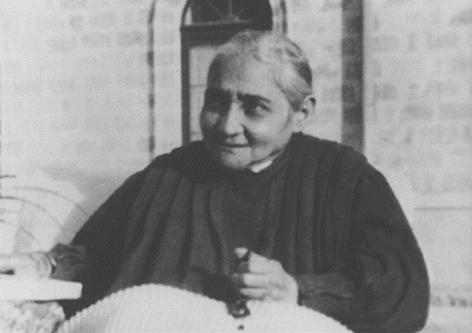
The Servant of God Luisa Piccarreta, Little Daughter of the Divine Will outside at the St. Anthony Orphanage in Corato, Italy. Normally invisable, the stigmata Luisa received can be seen in her hand holding the Holy Rosary, it looks like a line.
Permanent link to this article: https://luisapiccarreta.com/914-feast-of-the-exaltation-of-the-holy-cross/
Richard of St. Laurence states “there is not such powerful help in any name, nor is there any other name given to men, after that of Jesus, from which so much salvation is poured forth upon men as from the name of Mary.” He continues, “that the devout invocation of this sweet and holy name leads to the acquisition of superabundant graces in this life, and a very high degree of glory in the next.”
After the most sacred name of Jesus, the name of Mary is so rich in every good thing, that on earth and in heaven there is no other from which devout souls receive so much grace, hope, and sweetness.
Hence Richard of St. Laurence encourages sinners to have recourse to this great name, “because it alone will suffice to cure them of all their evils;” and “there is no disorder, however malignant, that does not immediately yield to the power of the name of Mary.” The Blessed Raymond Jordano says, “that however hardened and diffident a heart may be, the name of this most Blessed Virgin has such efficacy, that if it is only pronounced that heart will be wonderfully softened.” Moreover, it is well known, and is daily experienced by the clients of Mary, that her powerful name gives the particular strength necessary to overcome temptations against purity.
September 12th is the Feast Day of The Most Holy Name of Mary
In fine, “thy name, O Mother of God, is filled with divine graces and blessings,” as St. Methodius says. So much so, that St. Bonaventure declares, “that thy name, O Mary, cannot be pronounced without bringing some grace to him who does so devoutly.”. . grant, O Lady, that we may often remember to name thee with love and confidence; for this practice either shows the possession of divine grace, or else is a pledge that we shall soon recover it.
On the other hand, Thomas a Kempis affirms “that the devils fear the Queen of heaven to such a degree, that only on hearing her great name pronounced, they fly from him who does so as from a burning fire.” The Blessed Virgin herself revealed to St. Bridget “that there is not on earth a sinner, however devoid he may be of the love of God, from whom the devil is not obliged immediately to fly, if he invokes her holy name with a determination to repent.” On another occasion she repeated the same thing to the saint, saying, “that all the devils venerate and fear her name to such a degree, that on hearing it they immediately loosen the claws with which they hold the soul captive.” Our Blessed Lady also told St. Bridget, “that in the same way as the rebel angels fly from sinners who invoke the name of Mary, so also do the good angels approach nearer to just souls who pronounce her name with devotion.”
Promises
Consoling indeed are the promises of help made by Jesus Christ to those who have devotion to the name of Mary; for one day in the hearing of St. Bridget, He promised His Most Holy Mother that He would grant three special graces to those who invoke that holy name with confidence: first, that He would grant them perfect sorrow for their sins; secondly, that their crimes should be atoned for; and, thirdly, that He would give them strength to attain perfection, and at length the glory of paradise. And then our Divine Savior added: “For thy words, O My Mother, are so sweet and agreeable to Me, that I cannot deny what thou askest.”
O amor mei nomen matris Dei -St. Anselm(Translation) “Oh name of the mother of God, thou art my love.”
.
St. Ephrem goes so far as to say, “that the name of Mary is the key of the gates of heaven,” in the hands of those who devoutly invoke it. And thus it is not without reason that St. Bonaventure says “that Mary is the salvation of all who call upon her.” “O most sweet name! O Mary, what must thou thyself be, since thy name alone is thus amiable and gracious,” exclaims Blessed Henry Suso.
Let us, therefore, always take advantage of the beautiful advice given us by St. Bernard, in these words: “In dangers, in perplexities, in doubtful cases, think of Mary, call on Mary; let her not leave thy lips; let her not depart from thy heart.”
Names of Jesus and Mary In every danger of forfeiting divine grace, we should think of Mary, and invoke her name, together with that of Jesus; for these two names always go together. O, then, never let us permit these two most sweet names to leave our hearts, or be off our lips; for they will give us strength not only not to yield, but to conquer all our temptations.
“The invocation of the sacred names of Jesus and Mary,” says Thomas a Kempis, “is a short prayer which is as sweet to the mind, and as powerful to protect those who use it against the enemies of their salvation, as it is easy to remember.”
Hour of Death
Thus we see that the most holy name of Mary is sweet indeed to her clients during life, on account of the very great graces that she obtains for them. But sweeter still will it be to them in death, on account of the tranquil and holy end that it will insure them.
Let us then, O devout reader, beg God to grant us, that at death the name of Mary may be the last word on our lips. This was the prayer of St. Germanus: “May the last movement of my tongue be to pronounce the name of the Mother of God;” O sweet, O safe is that death which is accompanied and protected by so saying a name; for God only grants the grace of invoking it to those whom He is about to save.
Father Sertorius Caputo, of the Society of Jesus, exhorted all who assist the dying frequently to pronounce the name of Mary; for this name of life and hope, when repeated at the hour of death, suffices to put the devils to flight, and to comfort such persons in their sufferings.
The Most Holy Name of Mary said Devoutly is a Prayer
“Blessed is the man who loves thy name, O Mary,” exclaims St. Bonaventure. “Yes, truly blessed is he who loves thy sweet name, O Mother of God! for,” he continues, “thy name is so glorious and admirable, that no one who remembers it has any fears at the hour of death.” Such is its power, that none of those who invoke it at the hour of death fear the assaults of their enemies. St. Camillus de Lellis urged the members of his community to remind the dying often to utter the holy names of Jesus and Mary. Such was his custom when assisting people in their last hour.
Oh, that we may end our lives as did the Capuchin Father, Fulgentius of Ascoli, who expired singing, “O Mary, O Mary, the most beautiful of creatures! let us depart together.”
Let us conclude with the tender prayer of St. Bonaventure:
“I ask thee, O Mary, for the glory of thy name, to come and meet my soul when it is departing from this world, and to take it in thine arms.” (End)
Maríæ
Excerpts from the Breviary for the Feast of the Most Holy Name of Mary (Sept. 12)
It is said: And the Virgin’s name was Mary. Let us speak a few words upon this name, which signifieth, being interpreted, Star of the Sea, and suiteth very well the Maiden Mother, who may very meetly be likened unto a star. A star giveth forth her rays without any harm to herself, and the Virgin brought forth her Son without any hurt to her virginity. The light of a star taketh nothing away from the Virginity of Mary. She is that noble star which was to come out of Jacob, whose brightness still sheddeth lustre upon all the earth, whose rays are most brilliant in heaven, and shine even unto hell, lighting up earth midway, and warming souls rather than bodies, fostering good and scaring away evil. She, I say, is a clear and shining star, twinkling with excellencies, and resplendent with example, needfully set to look down upon the surface of this great and wide sea.
The Most Holy Name of Mary
O thou, whosoever thou art, that knowest thyself to be here not so much walking upon firm ground, as battered to and fro by the gales and storms of this life’s ocean, if thou wouldest not be overwhelmed by the tempest, keep thine eyes fixed upon this star’s clear shining. If the hurricanes of temptation rise against thee, or thou art running upon the rocks of trouble, look to the star, call on Mary. If the waves of pride, or ambition, or slander, or envy toss thee, look to the star, call on Mary. If the billows of anger or avarice, or the enticements of the flesh beat against thy soul’s bark, look to Mary. If the enormity of thy sins trouble thee, if the foulness of thy conscience confound thee, if the dread of judgement appal thee, if thou begin to slip into the deep of despondency, into the pit of despair, think of Mary.
In danger, in difficulty, or in doubt, think on Mary, call on Mary. Let her not be away from thy mouth or from thine heart, and that thou mayest not lack the succour of her prayers, turn not aside from the example of her conversation. If thou follow her, thou wilt never go astray. If thou pray to her, thou wilt never have need to despair. If thou keep her in mind, thou wilt never fall. If she lead thee, thou wilt never be weary. If she help thee, thou wilt reach home safe at the last – and so thou wilt prove in thyself how meetly it is said: And theVirgin’s name was Mary.
Permanent link to this article: https://luisapiccarreta.com/912-feast-of-the-holy-name-of-mary/
Even though we cannot trace the celebration of the Feast of the Nativity of the Blessed Virgin Mary back any further than the sixth century, the source for the story of the birth of the Blessed Virgin Mary is much older. The earliest documented version is found in the Protoevangelium of James, an apocryphal gospel written about 150 A.D.
From the Protoevangelium of James, we learn the names of Mary’s parents, Joachim and Anna, as well as the tradition that the couple was childless until an angel appeared to Anna and told her that she would conceive.
Golden Legend: Sept 8: Nativity of the Virgin Mary: [Saint Jerome] relates therefore that Joachim, who was of Galilee and of the town of Nazareth, took to wife Saint Anna of Bethlehem. Both were just, and walked without reproach in all the commandments of the Lord. They divided all their substance in three parts, allotting one part to the Temple and its ministers, and another to the poor and the pilgrims, reserving the third part to themselves and the uses of their household.
Thus they lived for twenty years, and had no issue of their wedlock; and they made a vow to the lord that if He granted them offspring, they would dedicate it to the service of God. For this they went to Jerusalem to celebrate the three principal feasts of each year. And once, when Joachim and his kinsmen went up to Jerusalem at the feast of the Dedication, he approached the altar with them, in order to offer his sacrifice. A priest saw him, and angrily drove him away, upbraiding him for daring to draw near the altar of God, and calling it unseemly that one who lay under the curse of the Law should offer sacrifice to the Lord of the Law, or that a childless man, who gave no increase to the people of God, should stand among men who bore sons. At this Joachim was covered with confusion, and was ashamedto return to his home., lest he have to bear the contempt of his kindred, who had heard all….He went off therefore and dwelt for some time among his shepherds. Protoevangelion, I,5-6: …he was exceedingly distressed, and would not be seen by his wife:But retired into the wilderness, and fixed his tent there and fasted forty days and forty nights.
Meanwhile Anna wept bitterly, not knowing where her husband had gone. Then the same angel appeared to her, and revealed to her the same things which he had announced to Joachim, adding that as a sign she was to go to the Golden Gate of Jerusalem, to meet her husband at his return.But one day when he was alone, an angel appeared to him, surrounded by dazzling light. He was affrighted at the vision,but the angel bade him be without fear, saying: “I, the Lord’s angel, am sent to thee, to announce to thee that they prayers are granted, and thine almsworks have ascended in the sight of the Lord. I have seen thy shame, and heard the reproach of barrenness wrongfully cast upon thee. For God indeed punishes not nature, but sin; and therefore, when
He closes a womb, it is only that He may later open it more wondrously, and that all may know that what is born thereof is the fruit of lust but of the divine munificence. Did not Sara, the first mother of your race, bear the shame of barrenness until her ninetieth year, and yet bear Isaac, to whom was promised the blessing of all nations? Did not Rachel also long remain barren, and yet beget Joseph, who was the ruler of all of Egypt? Who was stronger than Samson or holier than Samuel? Yet both of these were the sons of barren mothers! Therefore believe my words and these examples: those conceived after long delay, and begotten of sterile mothers, are wont to be admirable! Thus Anna thy wife will bear thee a daughter, and thou shalt call her name Mary. In accordance with your vow, she shall be consecrated to the Lord from her infancy, and shall be filled with the Holy Spirit from her mother’s womb; nor shall she abide without, among the common folk, but within the Temple of the Lord, lest aught of evil be thought of her. And as she will be born of a barren mother, so will she herself, in wondrous wise, beget the Son of the Most High. Whose name will be called Jesus, and through Whom salvation will come to all nations! And this will be a sign to thee: when thou shalt come to the Gold Gate of Jerusalem, Anna thy wife will meet thee there, who now grieves at thy tarrying, and then will rejoice to see thee!” And with these words the angel left him.
Thus it was, following the angel’s command, they came face to face [ at the Golden Gate], and shared their joy over the vision which they had both seen, and over the certainty that they were to have offspring. Then they adored God and set out for their home, awaiting the Lord’s promise in gladness of heart.
The traditional date of the feast, September 8, falls exactly nine months after the feast of the Immaculate Conception of Mary. Perhaps because of its close proximity to the feast of the Assumption of Mary, the Nativity of the Blessed Virgin Mary is not celebrated today with the same solemnity as the Immaculate Conception. It is, nonetheless, a very important feast, because it prepares the way for the birth of Christ. It is also an unusual feast, because it celebrates a birthday. The feasts of saints are traditionally celebrated on the day of their death, because that is the date on which they entered into eternal life. And, indeed, we also celebrate the Blessed Virgin Mary’s entrance into Heaven on August 15, the Feast of the Assumption.
There are only three people whose birthdays have traditionally been celebrated by Christians. Jesus Christ, at Christmas; Saint John the Baptist; and the Blessed Virgin Mary. And we celebrate all three birthdays for the same reason: All three were born without Original Sin. Christ, because He was conceived by the Holy Spirit; Mary, because she was kept free from the stain of Original Sin by the action of God in His foreknowledge that she would agree to be the mother of Christ; and Saint John, because he was blessed in the womb by the presence of his Savior when Mary, pregnant with Jesus, came to aid her cousin Elizabeth in the final months of Elizabeth’s pregnancy (we celebrate in the Feast of the Visitation).
Day Ten
The Queen of Heaven in the Kingdom of the Divine Will.
The Dawn that rises to put to Flight the Night of the HumanWill: Her Glorious Birth.
Lesson of the Newborn Queen:
Child of my Heart, my birth was prodigious; no other birth can be said to be similar to mine. I enclosed in Myself the heaven, the Sun of the Divine Will, and also the earth of my humanity – a blessed and holy earth, which enclosed the most beautiful flowerings. And even though I was just newly born, I enclosed the prodigy of the greatest prodigies: the Divine Will reigning in Me, which enclosed within Me a heaven more beautiful, a Sun more refulgent than those of Creation, of which I was also Queen, as well as a sea of graces without boundaries, which constantly murmured: “Love, love to my Creator…” My birth was the true dawn that puts to flight the night of the human will; and as I kept growing, I formed the daybreak and called for the brightest daylight, to make the Sun of the Eternal Word rise over the earth.
My child, come to my cradle to listen to your little Mama. As soon as I was born, I opened my eyes to see this low world, to go in search of all my children so as to enclose them within my Heart, give them my maternal love and, regenerating them to the new life of love and of grace, give them the step which would let them enter into the Kingdom of the Divine Fiat, which I possessed. I wanted to act as Queen and Mother, enclosing everyone in my Heart, to bring everyone to safety, and to give them the great gift of the Divine Kingdom. In my Heart I had a place for everyone, because for one who possesses the DivineWill there are no constraints – only infinite expanses. I looked also at you, my child – no one escaped Me. And since on that day everyone celebrated my birth, it was also feast for Me. But upon opening my eyes to the light, I had the sorrow of seeing the creatures in the thick night of the human will.
Oh, what an abyss of darkness envelops the creature who lets herself be dominated by her will! It is the true night, but a night with no stars – with, at most, a few fleeting lightnings – lightnings easily followed by thunders which, in roaring, thicken the darkness even more, and unload the storm over the poor creature – storms of fear, of weakness, of danger, of falling into evil. My poor Heart was pierced in seeing my children in this horrible storm, in which the night of the human will had overwhelmed them. Now listen to your little Mama: I am still in the cradle, I am little – look at the tears I shed for you! Every time you do your will, it is a night that you form for yourself; and if you knew how much this night harms you, you would cry with Me! It makes you lose the light of the day of the HolyWill; it turns you upside down; it paralyzes you to good; it breaks true love in you, and you remain like a poor ill one, who lacks the necessary things to be healed. Ah,my child, dear child,listen to Me: never do your will; give Me your word that you will make your little Mama content….
Luisa received the gift of the Divine Will in its fullness which is the perennial possession of the Three Divine Persons, concealed in the three theological virtues (Faith, Hope and Charity), on September 8 A.D. 1889, Feast of the Nativity of Mary. Luisa was 24 and a half years old. When Luisa was 13 she saw the vision of Jesus carrying the cross, so it took about 11 years of training by Jesus and sufferings before she was given the gift of the fullness of the Divine Will.
On February 28 A.D. 1899, Luisa began to write her volumes (large notebooks) in the form of a diary. Most likely she wrote at the same time volume 2, as a diary, and volume 1, in which she narrates her past life, from the age of 12 on (more or less, between 1877 and 1899). Subsequently, in 1926, she had to write a “Notebook of childhood memories” in order to complete volume 1. The last chapter of the last volume (vol. 36) was written on December 28 A.D. 1938.
Afterwards she did not write any more, as the order to do it ceased.
About 15 B.C. was The Nativity of the Blessed Virgin Mary
HAPPY BIRTHDAY TO YOU BLESSED MOTHER!
On this day in 1889 the Servant of God Luisa Piccarreta receives the Gift of the Divine Will; Mystical Marriage renewed in Paradise; Jesus presents Luisa the ring with three precious stones: white, red, green.
Book of Heaven The Call of the Creature to the Order, the Place and the Purpose for which He was Created by God Volume One
The Servant of God Luisa Piccarreta, Little Daughter of the Divine Will:
“After this, on that morning (Feast of the Nativity of the Blessed Virgin Mary), in order to dispose my heart more, Jesus spoke about the annihilation of myself. He also spoke of the immense desire which I was to excite within me in order to dispose myself to receive that grace. He (Jesus) told me (Luisa) that desire makes up for the lacks and imperfections that may be in the soul; it is like a mantle that covers everything. But this was not a simple speaking – it was an infusion in me of that which He was saying.While my soul was exciting itself with ardent yearnings for receiving the grace that Jesus Himself wanted to give me, Jesus came back and transported me outside of myself, up to Paradise. And there, in the presence of the Most Holy Trinity and of all the Celestial Court, He renewed the marriage. Jesus put out the ring adorned with three precious stones, white, red and green, and He gave it to the Father, who blessed it and gave it back to the Son again. The Holy Spirit took my right hand and Jesus placed the ring on my ring finger. Then I was admitted to the kiss of all the Three Divine Persons, and each of Them blessed me.Who can tell my confusion when I found myself before the Most Holy Trinity? I will just say that as soon as I found myself in Their presence, I fell flat to the ground, and I would have remained there if it wasn’t for Jesus, who encouraged me to go into Their presence, so much was the light, the sanctity of God. I am only saying this; the other things I will leave out, because I remember them confusedly.”
Book of Heaven The Call of the Creature to the Order, the Place and the Purpose for which He was Created by God
Volume 26 – September 8, 1929
The birth of the Virgin was the rebirth of all humanity.
The Servant of God, Luisa Piccarreta the Little Daughter of the Divine Will:
My poor mind was wandering in the immense Sea of the Divine Fiat, in which everything is in act, as if there were no past and no future, but everything present and everything in act. So, whatever thing it wants to find of the works of its Creator in the Divine Will, my little soul finds it as if It were just doing it, in act.
And since I (Luisa) was thinking about the birth of my Celestial Mama, to give Her my poor homages, and I was calling all Creation together with me to sing the praises of the Sovereign Queen, my sweet Jesus told me: “My daughter, I too, together with you and with all Creation, want to sing the praises of the birth of the height of My Mama. You must know that this birth enclosed within itself the rebirth of the whole human family, and all Creation felt reborn in the birth of the Queen of Heaven. Everything exulted with gladness—they felt happy to have their Queen. Up to that moment, they had felt like a people without its Queen, and in their muteness they were waiting for that happy day in order to break their silence, and say: ‘Glory, love, honor to She who comes into our midst as our Queen. We shall no longer be without defense, without anyone who dominates us, without feast, because She has arisen, who forms our everlasting glory.’
“This Celestial Baby Girl, by keeping Our Divine Will intact within Her soul, without ever doing Her own, reacquired all the rights of Adam innocent before Her Creator, and the sovereignty over all Creation. Therefore, all felt themselves being reborn in Her, and We saw in this Holy Virgin, in Her little Heart, all the seeds of the human generations. So, through Her, humanity reacquired the rights lost, and this is why Her birth was the most beautiful, the most glorious birth. From Her very birth, She enclosed within Her maternal little Heart, as though in-between two wings,all generations, as children reborn in Her virginal Heart, so as to warm them, keep them sheltered, and raise them and nourish them with the blood of Her maternal Heart.
“This is the reason why this tender Celestial Mother loves creatures so much—because all are reborn in Her, and She feels the life of Her children within Her Heart. What can Our Divine Will not do wherever It reigns and has Its life? It encloses everything and everyone, and makes one the provider of good to all. So, all feel, under Her blue mantle, the maternal wing of their Celestial Mother, and they find in Her maternal Heart their little place in which to take cover.
“Now, My daughter, the one who lives in My Divine Will renews her rebirth and redoubles the rebirths for all human generations. When My Supreme Will live inside a heart and lays the fullness of Its endless light within it, It centralizes everything and everyone, It does everything, It renews everything, It gives back all that, for centuries upon centuries, It has not been able to give through the other creatures. So, this creature can be called the dawn of the day, the daybreak that calls the sun, the sun that gladdens all the earth, illuminates it, warms it, and with its wings of light, more than tender mother, embraces everything, fecundates everything; and with its kiss of light, it gives the most beautiful tints to flowers, the most delicious sweetness to fruits, maturity to all plants. Oh! if My Divine Will reigned in the midst of creatures, how many prodigies would It not operate in their midst?
“Therefore, be attentive; everything you do in My Divine Fiat is a rebirth that you have in It; and to be reborn in It means to be reborn in the Divine order, to be reborn in the light, to be reborn in the sanctity, in the love, in the beauty. And in each act of My Will, the human will undergoes a death, dying to all evils, and it lives again to all goods.”
The Blessed Virgin and the Servant of God Luisa Piccarreta
Book of Heaven
2/28/99 – Vol. 2
. . . I (Luisa) also understood that the words that the Lord says to His beloved souls – “I will espouse you in the Faith” – mean nothing less but that the Lord, in this mystical marriage, comes to endow the souls with His own virtues. It seems to me that it happens as to two spouses: as they join their properties together, the belongings of one can no longer be distinguished from those of the other, but both of them become their owners. However, in our case, the soul is poor – all the good comes from the Lord, who lets her share in His possessions. . .
***
On the Feast Day of the Purity of Mary Most Holy, the Servant of God Luisa Piccarreta, Little Daughter of the Divine Will, received the Gift of the Mystical Marriage.
Book of Heaven Volume One
The longed for day finally arrived, after not a little suffering. I remember that it was almost one year that I had been continuously in bed – it was the day of the purity of Mary Most Holy. On the night before that day, my lover Jesus made Himself seen all festive. He drew near me, took my heart in His hands, and He looked at it over and over again; He dusted it, and then He gave it back to me. Then He took a garment of immense beauty, whose background seemed to be a surface of gold streaked with various colors, and He clothed me with that garment. Then He took two gems, as if they were earrings, and He bejewelled my ears. Then He adorned my neck and my arms, and surrounded my forehead with a crown of immense value, all enriched with precious stones and gems, all refulgent with light; and it seemed to me that those lights were as many voices which resounded among themselves, speaking in clear notes of the beauty, the power, the fortitude, and of all the other virtues of my spouse Jesus. Who can tell what I comprehended, and in what sea of consolation my soul was swimming? It is impossible to say it.
Now, while He was crowning my forehead, Jesus told me: “Most sweet spouse, I place this crown upon you so that nothing may be missing in order to make you worthy of being my spouse; but then, after our wedding is finished, I will take it with Me to Heaven, to keep it for you at the moment of your death.” Finally, He took a veil and covered me completely with it, from head to foot; and He left me in that way. Ah! it seemed to me that there was a great meaning in that veil, because the demons, in seeing me all covered with that veil, were sofrightened and had such fear of me, that they fled, terrified. The very angels were around me with such veneration, that I myself was confused and all full of blushing.
On the morning of the aforementioned day, Jesus made Himself seen again all affable, sweet and majestic, together with His Most Holy Mother and Saint Catherine. First, the angels sang a hymn, while Saint Catherine assisted me, Mama took my hand, and Jesus put the ring on my finger. Then, we embraced and He kissed me, and so did Mama also. Then we had a conversation, all of love – Jesus told me of the great love He had for me, and I also told Him of the love I had for Him. The Most Holy Virgin made me comprehend the great grace I had received, and the correspondence with which I was to correspond to the love of Jesus.
My Spouse Jesus gave me new rules in order to live more perfectly, but since it has been a long time, I don’t remember them so well; therefore I will skip them. And so it ended, for that day.
***
On September 8, the day of the nativity of the Mary Most Holy, the Gift of the Mystical Marriage was renewed in Paradise in the presence of the Most Holy Trinity; Our Lord Jesus Christ presented the Servant of God Luisa Piccarreta with a ring of three precious stones, one white, one read, and one green.
Book of Heaven Volume One
One morning – it was the eve of the nativity of Mary Most Holy – my always benign Jesus Himself came to dispose me. He did nothing but come and go continuously. He would speak to me now about Faith, and then He would leave me, and I would feel a life of faith being infused in my soul. . . .
After this, on that morning, in order to dispose my heart more, Jesus spoke about the annihilation of myself. He also spoke of the immense desire which I was to excite within me in order to dispose myself to receive that grace. He told me that desire makes up for the lacks and imperfections that may be in the soul; it is like a mantle that covers everything. But this was not a simple speaking – it was an infusion in me of that which He was saying.
While my soul was exciting itself with ardent yearnings for receiving the grace that Jesus Himself wanted to give me, Jesus came back and transported me outside of myself, up to Paradise. And there, in the presence of the Most Holy Trinity and of all the Celestial Court, He renewed the marriage. Jesus put out the ring adorned with three precious stones, white, red and green, and He gave it to the Father, who blessed it and gave it back to the Son again. The Holy Spirit took my right hand and Jesus placed the ring on my ring finger. Then I was admitted to the kiss of all the Three Divine Persons, and each of Them blessed me.
Who can tell my confusion when I found myself before the Most Holy Trinity? I will just say that as soon as I found myself in Their presence, I fell flat to the ground, and I would have remained there if it wasn’t for Jesus, who encouraged me to go into Their presence, so much was the light, the sanctity of God. I am only saying this; the other things I will leave out, because I remember them confusedly. . .
Did you know that Muslims also venerate Mary? That they, too, believe in the Immaculate Conception? That the iconic Muslim prayer posture is connected to Mary? And most amazing of all, that it was no coincidence that Mary appeared at Fatima in Portugal?
What if the 100th Anniversary of the appearance of Our Lady of Fatima marked the beginning of a change in Christian-Muslim relations? What if it marked the turn of tide in conversions to Christianity? Find out how all this might be possible as we go through the following topics:
How the iconic Muslim prayer posture is connected to Mary
The difficulty in converting from Islam to Christianity
The remarkable treatment of the Virgin Mary in the Quran and by Mohammed
How Fatima, Portugal received its name
The surprising top destinations of Muslim pilgrimages
The Heresy that Never Declined
Hilaire Belloc, the Anglo-French writer and historian, described Islam as a heresy. If this is true, Venerable Fulton Sheen writes, Islam is “the only heresy that has never declined.”(1) Sheen continues that:
“[Other heresies] have had a moment of vigor, then gone into doctrinal decay at the death of the leader, and finally evaporated in a vague social movement. Islam, on the contrary, has only had its first phase. There was never a time in which it declined, either in numbers, or in the devotion of its followers.”
We should definitely take note of this, especially given the decline of Christianity in Western Europe. Christianity’s attempts to convert Muslims — even Saints Francis of Assisi and Ignatius of Loyola were stymied in their attempts — must be largely considered failures. Why might this be?
Here’s part of the reason. A Muslim converting to Christianity, at least from the Muslim’s point of view, would be much like a Christian converting to Judaism. Muslims believe that they have the final and definitive revelation of God to the world, that Jesus was only a prophet announcing Mohammed, the last of God’s real prophets. Though becoming Christian might seem like a step backward for them, Mohammed is merely a prophet of Allah and not Allah, himself. Jesus, however, is both God and man. Therefore, Islam is, in effect, a step backward from Jesus to John the Baptist, the last of the prophets.
Fulton Sheen firmly believes Islam will eventually be converted, but it will not be through the work of missionaries or the direct teaching of Christianity. It will be “through a summoning of the [Muslims] to a veneration of the Mother of God.”
The Quran and the Virgin Mary
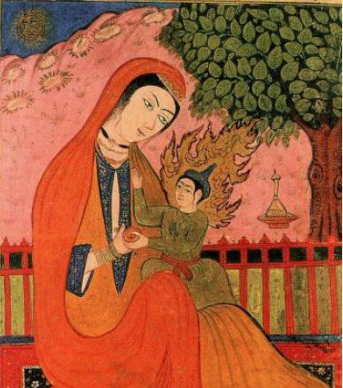
Mary holds an exalted place in Islam as the only woman named in the entire Quran.(2) It refers to Mary seventy times and even names her as the greatest of all women.
Though rejected by many Protestants, especially those descended from John Calvin, Marian doctrines such as her Immaculate Conception, Perpetual Virginity, and Assumption(3) are wholeheartedly endorsed by the Quran. The nineteenth chapter of the Quran alone contains forty-one verses on Jesus and Mary. It makes such a robust defense of Mary’s virginity here that in the fourth book of the Quran, the condemnation of the Jews is attributed to their calumny against the Virgin Mary.
Specific passages and details included in the Quran hint that Mohammed’s source text might have been the apocryphal Gospel of Mary’s birth. Both texts described the old age and sterility of Saint Anne, while Saint Anne is not even mentioned in the Bible. The Quran even quotes Saint Anne as saying, upon the Immaculate Conception: “O Lord, I vow and I consecrate to you what is already within me. Accept it from me.” And further, upon the birth of Mary, Saint Anne exclaims, “And I consecrate her with all of her posterity under thy protection, O Lord against Satan!” This appears to be a reference to Genesis 3:15, in which God prophesies that a woman will come who will be, from her beginning, an enemy of Satan.
When Saint Joseph asks Mary how Jesus was conceived without a father, this is how Mary answered:
“Do you not know that God, when He created the wheat had no need of seed, and that God by His Power made the trees grow without the help of rain? All that God had to do was to say. ‘So be it, and it was done.”
The Sayyida
The Quran also describes the Annunciation, the Visitation, and the Nativity. Angels are depicted as addressing the Blessed Mother and saying:
“O Mary, God has chosen you, and purified you; He has chosen you above all the women of creation.” (Quran 3:42)(4)
Above all the women of the earth! This is similar to Elizabeth’s address of Mary, “blessed are you among women and blessed is the fruit of your womb.” It also reinforces (and in effect proves) Mary’s own statement: “All generations will call me blessed.” When Mary said “all generations,” isn’t it amazing that her statement should extend beyond Christianity? To two world religions?
To the Muslims, the Blessed Mother is the true Sayyida, or Lady. The only serious rivals to Mary would be Mohammed’s daughter, Fatima, and his wife, both of whom are numbered along with Mary as the four greatest women in Islamic history – interestingly, Mohammed’s mother is not on this list.
Nevertheless, after the death of Fatima, Mohammed wrote, “Thou shalt be the most blessed of all the women in Paradise, after Mary.”(5) Fatima, herself, is even known to have said, “I surpass all women, except Mary.”
Sayyida is not the Blessed Mother’s only title in Islam. She also bears the titles Qānitah(6) and Siddiqah. Twice in the Quran Mary is called Siddiqah, which means “She who confirms the truth” or “She who has faith.”(7)
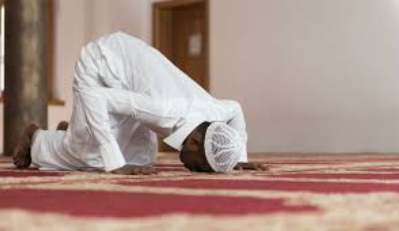
At least two more Marian titles derive from the beautiful gesture of prayer. These are Rāki’ah, which means “She who bows down to God in worship”, and Sājidah, “She who prostrates to Allaah (God Almighty) in worship.” The Quran states: “O Mary, you shall submit to your Lord, and prostrate and bow down with those who bow down.”(8) According to some Islamic scholars, Ruku’ (bowing down) in Salaah (Muslim prayer) during prayer has been derived from Mary’s practice. In this motion, the hands, knees and the forehead of the worshipper touch the ground together. This is the humblest position one can be in before his Lord, the sincerest sign of humility and surrender to the Creator.
Isn’t that amazing? The very posture of prayer and supplication, which so defines our conception of Muslims, is actually derived from the Virgin Mary!
Certain of Mary’s titles emphasis the purity of Mary from sin including Tāhirah (“She who was purified”), Sa’imah(“She who fasts”), and Mustafia (“She who was chosen”). Some Muslim traditions record that Mary Sa’imah fasted for half a year. The journalist Samir Khalil Samir records the following concerning devotion to Mary Sa’imah (9):
“When I was in Morocco, I found that many women, during pregnancy and after childbirth, continued the so-called “fast of Our Lady,” inspired by the Koran, which speaks of this fast.”
With regard to the title Mustafia, the Quran records the angels as singing: “O Mary! Lo! Allah hath chosen thee and made thee pure, and hath preferred thee above (all) the women of creation.”(10) It makes you wonder why Allah preferred Mary above all other mothers, even Mohammed’s.
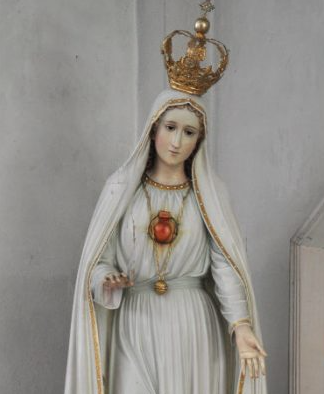
Why Did Our Lady Come to “Fatima”?
This brings us to a very important question: why the Blessed Mother should have revealed herself in 1917 in the insignificant little village of Fatima, so that to all future generations she would be known as “Our Lady of Fatima”? As discussed above, Fatima was the highly esteemed daughter of Mohammed, who said of herself, “I surpass all women, except Mary.”
Fulton Sheen answers the question this way:
“Since nothing ever happens out of heaven except with a finesse of all details, I believe that the Blessed Virgin chose to be known as “Our Lady of Fatima” as a pledge and a sign of hope to the Moslem people, and as an assurance that they, who show her so much respect, will one day accept her Divine Son, too.”
Sheen cites the auspicious history of the village of Fatima as evidence for Mary’s “pledge”.
Muslims, specifically the Moors, had occupied the Iberian peninsula of Portugal and Spain for centuries. The Umayyad Caliphate completed its conquest of Iberia in AD 711. Christians began the long slog of reconquering the peninsula with the Battle of Covadonga in 718 and would not retake their lands for another 700 years, when Ferdinand and Isabella completed the Reconquista in 1492, the year of Columbus.
At the time when the Muslims were finally driven out of Portugal, the last Muslim chief had a beautiful daughter by the name of Fatima. The story of how the village of Fatima received its name is retold by Friar Bernardino de Brito in his Chronicle of the Order of Cister (1602):
“In a surprise attack on Saint John’s Day in 1158, a Christian knight, Gonçalo Hermigues and his companions kidnapped a Moorish princess with the famous Arab name of Fatima. The knight took Fatima to a small village of the recently created Kingdom of Portugal, in the Serra de Aire hills. The princess fell in love with the Christian knight and decided to become herself a Catholic, taking the name of Oureana.”(11)
The young husband was so much in love with his wife that he changed the name of the town where he lived to Fatima. Thus, the very place where Our Lady appeared in 1917 bears a historical connection to Fatima, the daughter of Mohammed.
The Blessed Mother and Muslims Today
For further evidence of Mary’s purpose in choosing Fatima, one need look no further than the faces of the pilgrims to Fatima, themselves.
Samir Khalil Samir writes for the Asian News Agency PIME about the pilgrims visiting Our Lady of Fatima and other Marian holy sites: (12)
“For years now plane loads of Muslim women from Iran have been landing at Fatima, Portugal. They come to pray before Our Lady who appeared to three shepherd children. The reason is that the Madonna was named after the daughter of Muhammad and wife of Ali Ibn Abi Talib.”
Samir also writes about Muslim families flocking to other Marian shrines, especially that of Our Lady of Lebanon:
“In Harissa, Lebanon, Iranian women constantly come to pray to Our Lady, to the point that the rector of the shrine has a chapel prepared especially for them, with icons, signs and prayers to the Virgin in Persian, to facilitate their devotion.
“Last year, during the month of May, as I waited for evening Mass to begin in Harissa, I saw hundreds of Muslim families – probably Shiite – who stopped to listen to the hymns before Mass and who only left at the end.”
Popular devotion to these appearances of Our Lady, as well as to Saint Charbel Makhlouf of Lebanon, is growing among Muslims, much to the chagrin of radical Islamists. This is why ISIS and groups such as these destroy pilgrimage sites whenever possible.
Pray for the conversion of Muslims!
End Notes
(1) Sheen, Fulton, The World’s First Love, McGraw-Hill Book Co., Inc., New York (1952): 205-6.
(2) The Quran (sometimes spelled Koran) is the bible of Islam.
(3) Lings, Martin, Muhammad: His Life Based on the Earliest Sources, Inner Traditions (rev. ed. October 6, 2006, orig. 1983), p. 101; an example of an Islamic scholar which accepts the Assumption of Mary as an historical fact.
(4) cf. trans. Arberry and Pickthall; Stowasser, Barbara Freyer, “Mary”, in Encyclopaedia of the Qurʾān, General Editor: Jane Dammen McAuliffe, Georgetown University, Washington DC.
(5) Sheen, 208.
(6) Mary is called this in sura 66:12. The Arabic term means constant submission to God and absorption in prayer. These meanings coincide with Mary spending her childhood in the temple of prayer. This is likely based on a reference to apocryphal texts, but it is amazing how it supports her being the New Ark in the Temple of God.
(7) Sura 5 (Al-Ma’ida), ayat 73–75 and 66:12
(8) Quran 3.43
(9) Samir, Samir Khalil, “Millions of Muslims devoted to Our Lady and eager forexorcism,” July 26, 2013
(10) Quran 3.42
(11) Following her marriage, the princess received as prize the town which she called Ourém, after her name. Ourém remains the name of the municipality which contains the cities of both Ourém and Fatima.
(12) Samir, 2013.

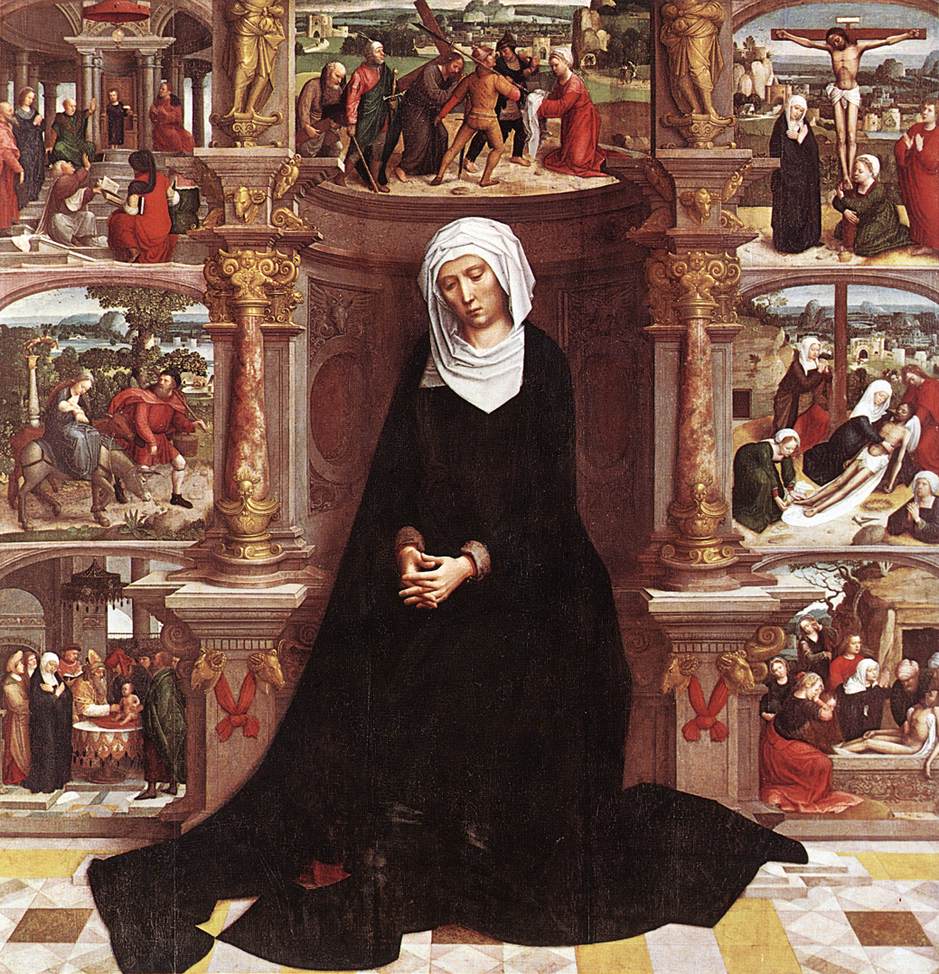
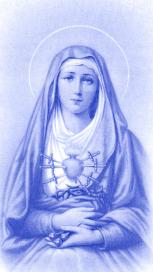 The Miraculous Image of Our Lady of Sorrows