Accessibility Tools

3/21 Love is my perennial “Passion”


Love is my perennial “Passion”

Published 3/16/16 by the Official Website of Luisa Piccarreta

The agony of Jesus in the garden of Gethsemane (third part)

3/16/2016
 Jesus’ prayer to the Father and the conformation of the human will to the divine will.

Let’s go back to our story to continue with our meditation on the agony of Jesus. We have to make a little note to this story and it’s a kind of counterpoint that compares the attitude of the disciples with that of Jesus. These attitudes are put by Mark in opposition among them, to show how the acts of Jesus become the model that every disciple must follow. For example: the disciples were seated whereas Jesus fell prostrate on the ground, the disciples slept whereas Jesus stayed awake and prayed, the disciples were weak at that time, whereas Jesus found the strength to keep going. Around these opposing attitudes Mark shows how the disciples slept in the weakness of the flesh, closed in their will, whereas Jesus fell prostrate on the ground and stayed awake, He prayed in the power of the spirit, He opened to God’s Will and accomplished it. The gospel shows this difference not to humiliate the disciples, but to give strength to the action of Jesus and to emphasize the great scope of the event of the Passion.

Jesus came to this Hour, to this decisive hour in the history of man, that of faith. The real struggle is the struggle of man with God. After sin man continues to struggle with God, because he does not recognize Him as a father, but as a being to be feared, He is an antagonist to the man. If we recall the history of the people of Israel in the Old Testament we find the background of the ongoing struggle between God and his people, between God and man.

The people accused God of being a severe judge, a God who punishes, a God awful, whereas Jesus reveals to us a completely different face of God, the true face of God. But to discover this true face of God that Jesus reveals to us, we need faith. And faith, in this passage, is described precisely through the behavior of Jesus.

Faith is the passage from my will to the will of God. When can I fulfill the will of God? When I have faith in Him. Jesus has shown us the way to live this faith not with words, but rather with our life, abandoning ourselves fully to the Father, putting our life in his hands, accomplishing his will.

When does my will become the will of God? Luisa would say, when there is a complete and profound unity between the human and the divine will.

The agony of Jesus marks the moment when the wall between man and God was removed; “Happy is the night of our salvation, in which the Lord of life is immersed in all our nights, bringing the light of his name” (F. Silvano Fausti).  In the agony of the Garden Jesus worked for the salvation of man, if each of us brings our nights in the night of Jesus, our sufferings in the suffering of Jesus, our questions in the question of Jesus, He will offer them to the Father and by accomplishing His will, everything will become salvation for us.

But let us continue with our reading of this passage of the Gospel of Mark and get to the verse 36: “And He said, Abba, Father, all things are possible unto Thee. Take away this cup from Me; nevertheless not what I will, but what Thou wilt “.

In this prayer of Jesus we can identify three important steps: the first is represented by the first words of Jesus – Abba! Father! – It is a doubling of the term. Jesus called God twice, with two different names: Abba, that was a common term that young children would use to address their fathers with filial confidence and moreover it emphasizes the unconditional abandonment into the hands of their own father. And then Jesus reveals who this “Abba” is : it is God the Father, it is not God the judge, it is not God the punisher, it is not God the avenger, but God the Father, the one who loves.

A second step is characterized by the awareness of Jesus about the omnipotence of the Father: “All things are possible to you.” And this introduces a request, where there is the drama of the human will because of death and evil: “Take away this cup from me”. As Jesus felt this weight, this bitterness, He didn’t know if He could. He addressed to God who is omnipotent, so that He took away that cup away from Him.

And finally, the third step of the prayer of Jesus, is the decisive one: the human will adheres to God’s will. “Yet not what I will, but what thou wilt.”

The Pope, again in the catechesis of February 1, 2012, said: “In the unity of the divine person of the Son, the human will finds its complete fulfilment in the total abandonment of the I to the You of the Father, called Abba.

St Maximus the Confessor says that ever since the moment of the creation of man and woman, the human will has been oriented to the divine will and that it is precisely in the “yes”(fiat) to God that the human will is fully free and finds its fulfilment. Unfortunately, because of sin, this “yes” (fiat) to God is transformed into opposition:

Adam and Eve thought that the “no” to God was the crowning point of freedom, of being fully themselves. On the Mount of Olives, Jesus brings the human will back to the unreserved “yes”(fiat) to God; in him the natural will is fully integrated in the orientation that the Divine Person gives it. Jesus lives his life in accordance with the centre of his Person: his being the Son of God. His human will is drawn into the I of the Son who abandons himself totally to the Father. Thus Jesus tells us that it is only by conforming our own will to the divine one that human beings attain their true height, that they become “divine”; only by coming out of ourselves, only in the “yes” (fiat) to God, is Adam’s desire — and the desire of us all — to be completely free. It is what Jesus brings about at Gethsemane: in transferring the human will into the divine will the true man is born and we are redeemed. (Pope Benedict XVI).

The human will doesn’t stop being human, Jesus does not want the human dimension to be canceled, but He wants it to be submerged in the divine will (living “for” God “with” God and in “God”), so that it can be transformed or rather, conformed to Him. The human will no longer exist not because it was destroyed but because it was joined with the divine will becoming one, it was deified, realizing God’s plan to deify man.

On January 4, 1924 Luisa was thinking about the words of Jesus in the Garden and Jesus, moving in her interior, told her that it was not because of the chalice of His Passion that He said to the Father: ‘Father, if it be possible, let this chalice pass from Me’ it was the chalice of the human will which contained such bitterness and fullness of vices, that his human will, united to the Divine, felt such repugnance, terror and fright, as to cry out: ‘Father, if it be possible, let this chalice pass from Me.’ How ugly is the human will without the Divine Will which, almost as within a chalice, enclosed Itself in each creature!

The bitter cup that Jesus drank wasn’t the physical suffering, but the inner suffering because of the human will that does not enter into the divine will. Jesus knew that man’s sin lies in his inability to surrender to the will of God because of his distrust; and for Jesus this is a bitter cup, because at that moment he was experienced fully his humanity and saw that men were far from living the divine will. He saw that man could deify in his humanity but because of his distrust towards God  he didn’t it.

He added as many as three times: ‘Non mea voluntas, sed Tua fiat (Not my will, but Yours be done) because He felt upon Himself the wills of creatures united together, all of their evils, and in the name of all He cried out to the Father: ‘May the human will be done on earth no more – but the Divine. May the human will be banished, and may the Divine Will reign.’ So, even from that time – and he wanted to do this at the very beginning of his Passion, because the calling upon earth of the Fiat Voluntas Tua on earth as It is in Heaven was the thing that interested Him the most and the most important one – he Himself said in the name of all: ‘Non mea voluntas, sed Tua fiat.’

In a certain sense Jesus wanted to take the human will and this is why He called with Him Peter, James and John as witnesses, and when it seemed that the human will wanted to get away from the divine will, because it was affected by suffering and had as its perspective the death and thus more distance from God, Jesus did an act of obedience and above all an act of love towards God, putting everything into his hands. He explained to each of us that it is possible, also at that time, to live this dimension. This is the redemptive value of suffering. Suffering does not redeem man because it makes him atone for his sins, but because it is experienced in the love that purifies sins. It is not the physical pain that cleanses us, but the inner struggle that the physical suffering makes us live.

Again the Pope in his catechesis, tried to transfer these theological reflections into the daily experience of the believer, and said: “Dear brothers and sisters, every day in the prayer of the Our Father we ask the Lord: “thy will be done, on earth as it is in heaven” (Mt 6:10). In other words we recognize that there is a will of God with us and for us, a will of God for our life that must become every day, increasingly, the reference of our willing and of our being; we recognize moreover that “heaven” is where God’s will is done and where the “earth” becomes “heaven”, a place where love, goodness, truth and divine beauty are present, only if, on earth, God’s will is done.

In Jesus’ prayer to the Father on that terrible and marvellous night in Gethsemane, the “earth” became “heaven”; the “earth” of his human will, shaken by fear and anguish, was taken up by his divine will in such a way that God’s will was done on earth.

And this is also important in our own prayers: we must learn to entrust ourselves more to divine Providence, to ask God for the strength to come out of ourselves to renew our “fiat” to him, to say to him “thy will be done”, so as to conform our will to his. It is a prayer we must pray every day because it is not always easy to entrust ourselves to God’s will, repeating the “yes” of Jesus, the “yes” of Mary.

The Gospel accounts of Gethsemane regretfully show that the three disciples, chosen by Jesus to be close to him, were unable to watch with him, sharing in his prayer, in his adherence to the Father and they were overcome by sleep” (Pope Benedict XVI).

In the gospel Jesus told his apostles: “Are you still sleeping and taking your rest?” (verse. 41), but He did not said these words with bitterness, for their inability to stay awake, but for the inability to accept and face the dramatic moments of life. When man does not understand what is happening and this is too big for him here is that he takes refuge in sleep, to escape the events. Jesus said: “Are you still sleeping? ” because it was He, on behalf of all, who faced that drama and showed us how it is possible to live it in the right way,  so that we too, looking at Him, can live it in the same manner. The first one to imitate so deeply the behavior of Jesus was Luisa. It was her, his little newborn of his Will, his little daughter, who felt such repugnance and fright at her will that, trembling, she clung to Jesus and cried out with Him: ‘Father, if it be possible, let this chalice of my will pass from me.’ And, crying, she added with Him: ‘Non mea voluntas, sed Tua fiat’, because  at least one creature was needed in order to validate this contract with God.

We too, as Luisa and the three Apostles, are called to be witnesses of this “contract” because we too must learn to live it. Luisa lived it, the three apostles lived it after the resurrection when they re-read in the light of the resurrection of Jesus all his life and his Passion, and we too are called to take this path.

Perhaps the image of Jesus that the Gospel offers us is a bit different, but it is so true! The world is full of people who don’t accept the discourse that we are taking. People would like a different God and instead the beauty of it is that God manifested his face in this way: He shared our condition all the way, He shared our being before God and therefore our fear. The greatness of Christ is not in avoiding the human experience, but in living it. This is the face of God in Christianity, who says his greatness not distancing, but entering in the existence of man.
Permanent link to this article: https://luisapiccarreta.com/321-love-is-my-perennial-passion/

3/20 PALM SUNDAY

palm-sunday-hosanna-bulletin-cover

March 20 A.D. 2016 – Palm Sunday

 Palms are blessed on Palm Sunday. They remind us of Our Lord’s triumphal entry into Jerusalem, when the people, wishing to honor Him and make Him king, strewed palm branches and even their own garments in

His path, singing: Hosanna to the Son of David.

Book of Heaven – March 31 A.D. 1901

 Inconstancy and volubility.

This morning, feeling all embittered, I saw myself still so bad, that I almost did not dare to go in search of my highest and only Good. But the Lord, looking not at my miseries, still deigned to come, telling me: “My daughter (Luisa), is it Me that you(Luisa) want? Well then, I have come to cheer you (Luisa) – let us be together, but let us remain in silence.”

After staying for some time, He transported me outside of myself, and I saw that the Church was celebrating the Day of the Palms; and Jesus, breaking the silence, told me: “How much volubility, how much inconstancy! Just as today they

cried out ‘Hosanna!’, proclaiming Me as their King, on another day they cried out ‘Crucify Him! Crucify Him!’ My daughter (Luisa), the thing that displeases Me the most is inconstancy and volubility, because this is the sign that the truth has

not taken possession of these souls. Even in things of religion, it may be that they find their satisfaction, their own convenience and interest, or that they just find themselves in that party; but tomorrow these things may be missing, or they may find themselves involved in other parties – and here is how they deviate from religion, and with no regret they give themselves to other sects. Indeed, when the true light of Truth enters a soul and takes possession of a heart, she is not subject to inconstancy. On the contrary, she sacrifices everything for love of It and to let herself be mastered by It alone; and with unconquered heart she despises everything else which does not belong to the Truth.” And while saying this, He cried over the condition of the present generation, worse than in those times, subject to inconstancy according to wherever the winds blow.

Book of Heaven – April 16 A.D. 1905

 Suffering is reigning.

Continuing in my usual state, my lovable Jesus made Himself seen for a little, with a nail inside His Heart; and drawing near my heart He would touch it with that nail, and I would feel mortal pains. Then He said to me: “My daughter (Luis), it is

the world that drives this nail deep inside my Heart, giving Me a continuous death. So, by justice, just as they give Me continuous death, I will allow that they give death among themselves, killing one another like many dogs.” And while

saying this, He made me hear the screams of the rebel, to the point that I remained deafened for four or five days. Then, as I was very much in suffering, He came back a little later and told me: “Today is the Day of the Palms in which I was

proclaimed King. All must aspire to a kingdom, but in order to acquire the eternal kingdom it is necessary for the creature to acquire the regime of herself through the dominion of her passions. The only means is suffering, because suffering is reigning; that is, through patience, man puts himself in his place, becoming king of himself and of the eternal kingdom”


Giotto di Bondone, “Entry into Jerusalem,” circa 1305


Permanent link to this article: https://luisapiccarreta.com/320-palm-sunday/

3/19 Feast Day of St. Joseph the Worker

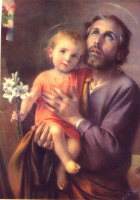
3/19 – Feast Day of St. Joseph the Worker

St. Joseph the Worker

Book of Heaven
The Call of the Creature to the Order, the Place and the Purpose
for which He was Created by God
Volume 11; August 14, 1912

The Servant of God Luisa Piccarreta, Little Daughter of the Divine Will:

… Now, one day I (Luisa) was working and I thought to myself: “How is it possible that Jesus works in me while I work? Does He really want to do this work?”

And Jesus: “Yes I do. My (Jesus) fingers are in yours (Luisa) and they work. My daughter, when I was on earth, didn’t My hands lower themselves to work the wood, hammer the nails, and help My foster Father Joseph in the smithing work? While I was doing that, with those very hands and with those fingers, I created souls and called other souls to the other life; I divinized all human actions; I sanctified them, giving a Divine merit to each one of them. In the movements of my fingers I called in sequence all the movements of your fingers and those of others; and if I saw that they were doing them for Me, or because I wanted to act within them, I continued my life of Nazareth in them, and I felt cheered by them for the sacrifices and the humiliations of my hidden Life, giving them the merit of my own Life.

Daughter (Luisa), the hidden Life that I (Jesus) conducted in Nazareth is not taken into account by men, when in fact, after the Passion, nothing could benefit them more. By lowering Myself to all those little actions and those acts which men exercise during their daily life, such as eating, sleeping, drinking, working, starting the fire, sweeping, etc. – all acts which no one can do without – I made flow inside their souls a tiny divine coin of incalculable price. Therefore, if my Passion redeemed them, my hidden Life provided each human action, even the most insignificant one, with Divine merit and with infinite value.

Do you see? As you work – working because I want to work – my fingers flow within yours, and as I work in you with my creative hands, in this very instant, how many am I giving to the light of this world? How many others am I calling? How many others do I sanctify, correct, chastise, etc.? Now, you are with Me creating, calling, correcting and so forth; therefore, just as you are not alone, neither am I alone in my work. Could I ever give you greater honor?”

Who can say all that I (Luisa) understood, and all the good that can be done for ourselves and for others, by doing things because Jesus wants to do them in us? My mind gets lost, therefore I stop here.

***

The Virgin Mary in the Kingdom of the Divine Will
Day Eighteen

The Queen of Heaven in the Kingdom of the Divine Will in the House of Nazareth. Heaven and Earth are about to exchange the Kiss of Peace.
The Divine Hour is Near.

The soul to her Queen Mama:

My Sovereign Mama, I am back again to follow Your Steps. Your Love binds me, and like powerful magnet, it keeps me fixed and all intent on listening to the Beautiful Lessons of my Mama. But this is not enough for me; if You Love me as Your daughter, enclose me in the Kingdom of the Divine Will in which You Lived and Live, and close the doors in such a way that, even if I wanted, I would no longer be able to go out. So, as Mother and daughter, we will Live common Life and will both be Happy.

 Lesson of the Queen of Heaven:

My dearest daughter, if you knew how I long to keep you enclosed in the Kingdom of the Divine Will! Each Lesson of Mine that I give you is a fence that forms to prevent your stepping out, and is a fortress to wall up your will, that it may comprehend and love being under the Sweet Empire of the Supreme Fiat. Therefore, be attentive in listening to Me, because this is nothing other than the work that your Mama does in order to entice and captivate your will, and to make the Divine Will Conquer you.

Now, my dear daughter, listen to Me: I departed from the Temple with the same Courage with which I entered It, and only to do the Divine Will. I went to Nazareth and I no longer found My dear and holy parents. I (Blessed Mother) went accompanied only by Saint Joseph, and in him I saw My good angel whom God had given Me for My custody, though I had cohorts of Angels that accompanied Me on the journey. All created things made bows of honor for Me; and I, thanking them, gave each created thing My Kiss and My Greeting of Queen. And so we arrived at Nazareth.

Now, you must know that Saint Joseph and I looked at each other with modesty, and we felt our hearts swollen, because each one wanted to let the other know that we were bound to God with a vow of perennial virginity. Finally, silence was broken, and we both manifested our vow. O! How happy we felt; and thanking the Lord, we protested to live together as brother and sister. I was most attentive in serving him; we looked at each other with veneration, and the Dawn of Peace reigned in our midst. O! If all would reflect themselves in Me (Blessed Mother) by imitating Me! I adapted Myself very much to the ordinary life; I let nothing appear outside of the Great Seas of Grace that I possessed.

Now, listen to Me, my daughter: in the house of Nazareth I felt ignited more than ever, and I prayed that the Divine Word would descend upon earth. The Divine Will, which Reigned in Me, did nothing but Invest all My Acts with Light, with Beauty, with Sanctity, with Power. I felt It was forming the Kingdom of Light within Me— but a Light that constantly arises; the Kingdom of Beauty, Sanctity and Power that always grows. So, all the Divine Qualities, which the Divine Fiat extended within Me with Its Reigning, brought Me Fecundity. The Light that invaded Me was so Great, that My very humanity would remain so Embellished and Invested by this Sun of the Divine Will, that it would do nothing but produce Celestial Flowers. I felt Heaven lowering Itself down to Me, and the earth of My humanity rising; and Heaven and earth Embraced, Reconciled, to exchange the Kiss of Peace and of Love. And the earth disposed itself to produce the Seed in order to form the Just One, the Holy One; and Heaven opened to let the Word descend into this Seed.

I would do nothing but descend and ascend to My Celestial Fatherland, and throw Myself into the Paternal Arms of My Celestial Father, saying to Him with the Heart: “Holy Father, I cannot endure any longer—I feel Enflamed; and while I Burn, I feel a Powerful Strength within Me that wants to Conquer You. With the chains of My Love I want to bind You in order to disarm You, that You may delay no more; but upon the wings of My Love I want to carry the Divine Word from Heaven to earth.” And I prayed and cried that He would listen to Me. And the Divinity, Conquered by My Tears and Prayers, assured Me by saying to Me: “Daughter, who can resist You? You have won; the Divine Hour is near. Return to the earth and continue Your Acts in the Power of My Volition, and by these, all will be shaken, and Heaven and earth will exchange the Kiss of Peace.” But in spite of this, I did not yet know that I was to be the Mother of the Eternal Word.

Now, dear daughter, listen to Me, and comprehend well what it means to Live of Divine Will. By Living of It, I formed Heaven and Its Divine Kingdom in My Soul. Had I not formed this Kingdom within Me, the Word could never have descended from Heaven to earth. If He descended, it was because He descended into His own Kingdom, which the Divine Will had formed in Me. He found in Me His Heaven, His Divine Joys; nor would the Word ever have descended into a foreign kingdom—oh, no, no. First He wanted to form His Kingdom in Me, and then descend as Victorious into His Kingdom.

Not only this, but by Living always of Divine Will, I acquired by Grace that which in God is by Nature: the Divine Fecundity, in order to form, without the work of man, the Seed to let the Humanity of the Eternal Word germinate from Me. What can the Divine Will Operating in a creature not do? Everything, and all possible and imaginable Goods. Therefore, may you take to heart that everything be Divine Will in you, if you want to imitate your Mama, and make Me Content and Happy.

The soul:

Holy Mama, if You want, You can. Just as You had the Power to Conquer God, to the point of making Him descend from Heaven to earth, You will not lack the Power to Conquer my will, that it may no longer have life. In You I hope, and from You I will obtain everything.

 Little Sacrifice:

Today, to honor Me, you will make Me a little visit in the house of Nazareth, and, as homage to Me, you will give Me all your acts, that I may Unite them to Mine in order to convert them into Divine Will.

3/19 Feast of St. Joseph, Spouse of the Blessed Virgin Mary

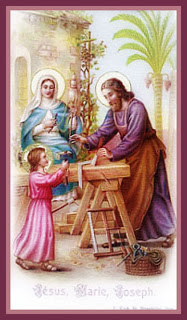
S_St Joseph the Worker

Day Twenty-five
The Virgin Mary in the Kingdom of the Divine Will


Lesson of the Queen of Heaven:

Dearest daughter, O! How I longed for you in order to continue My Lessons on the Kingdom which the Supreme Fiat extended ever more within Me.

Now, you must know that for your Mama, for Dear and Sweet Jesus, and for Saint Joseph, the little house of Nazareth was a Paradise. Being the Eternal Word, My Dear Son Possessed the Divine Will within Himself, of His own Virtue; and Immense Seas of Light, of Sanctity, of Joys and of Infinite Beauty resided in that Little Humanity. And I possessed the Divine Will by Grace; and even though I could not embrace Immensity, as did Beloved Jesus— because He was God and Man, and I was always His finite creature—yet, in spite of this, the Divine Fiat Filled Me so much, having formed Its Seas of Light, of Sanctity, of Love, of Beauties and of Happinesses; and the Light, the Love and everything that a Divine Will can Possess, which came out of Us, were so Great that Saint Joseph remained eclipsed, inundated, and lived of Our Reflections.

Permanent link to this article: https://luisapiccarreta.com/319-feast-day-of-st-joseph-the-worker/

3/18 The Words Of Jesus In The Garden: “Not My Will, But Yours Be Done”

‘The Kingdom of The Divine Will in the midst of creatures.  Book of Heaven. The call of the creature to the Order, the Place and the Purpose for which he was created by God’

 The words of Jesus in the Garden: “Not my will, but Yours be done.”

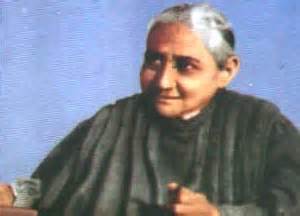
Mama Luisa 

Our Lord Jesus Christ to the Servant of God, Luisa Piccarreta,

The Little Daughter of the Divine Will

 VOLUME 16

 January 4, 1924

The words of Jesus in the Garden: “Not my will, but Yours be done.” In this way He established with His Celestial Father the contract of the Kingdom of the Divine Will upon earth.

 I was thinking about the words of Jesus in the Garden, when He said: “Father, if it is possible, let this chalice pass from Me; yet, non mea voluntas, sed Tua fiat” (“not my will, but Yours be done”). And my sweet Jesus, moving in my interior, told me: “My daughter (Luisa), do you (Luisa) think it was for the chalice of my Passion that I said to the Father: ‘Father, if it is possible, let this chalice pass from Me’? Not at all. It was the chalice of the human will which contained such bitterness and fullness of vice, that my human will united to the Divine felt such repugnance, terror and fright, as to cry out: ‘Father, if it possible, let this chalice pass from Me…!’ How ugly it is the human will without the Divine Will, which enclosed Itself in each creature, as within a chalice! There is no evil in the generations, of which it is not the origin, the seed, the source. And in seeing Myself covered with all these evils produced by the human will, before the Sanctity of my Will, I felt like dying. And indeed I would have died if the Divinity had not sustained Me.

But do you (Luisa) know why I added, and as many as three times, ‘Non mea voluntas, sed Tua fiat’ (‘Not my will, but Yours be done’)? I felt upon Myself all the wills of creatures united together – all their evils, and in the name of all I cried out to the Father: ‘May the human will be done on earth no more, but the Divine. May the human will be banished, and may Yours reign.’ Therefore, from that moment – and I wanted to do this at the very beginning of my Passion, because it was the thing which interested Me the most and the most important one: to call upon earth the “Fiat Voluntas Tua” on earth as it is in Heaven – I Myself said in the name of all: ‘Non mea voluntas, sed Tua fiat.’

From that time I constituted the era of the “Fiat Voluntas Tua” upon earth. And by saying it three times, in the first one I impetrated It, in the second I made It descend, and in the third I constituted It ruler and dominator. And in saying ‘Non mea voluntas, sed Tua fiat’, I intended to empty the creatures of their wills and to fill them with the Divine.

Before dying, since I had only hours left, I wanted to negotiate with my Celestial Father my prime purpose, for which I came upon earth – that the Divine Will take Its first place of honor in the creature. This had been the first act of man – to withdraw from the Supreme Will – and therefore Our first offense. All his other evils are in the secondary order. It is always my Will to have primacy in all things. And even though the fruits of Redemption could be seen before its effects, it was by virtue of this contract which I made with my Divine Father that His Fiat would come to reign upon earth, realizing the true purpose of the creation of man and the prime purpose for which I came upon earth, and that man could receive the fruits of Redemption. Otherwise, my Wisdom would have lacked order. If the origin of evil was his will, it was this will that I had to order and restore, reuniting Divine Will and human will. And even though the fruits of Redemption could be seen first, this says nothing. My Will is like a King who, though being first among all, arrives as last, being preceded, for honor and decorum, by his peoples, armies, ministers, princes and the whole royal court. Therefore, the fruits of Redemption were needed first, so that the royal court, the peoples, the armies and the ministers could be found worthy of the Majesty of my Will.

But do you (Luisa) know who was the first one to cry out together with Me: ‘Non mea voluntas, sed Tua fiat’? It was my Little Newborn of my Will, my little Daughter (Luisa), who felt such repugnance and fright for her will as to cling to Me; and trembling, she cried out with Me: ‘Father, if it possible, let this chalice pass from Me’. And crying, she added with me: ‘Non mea voluntas, sed Tua fiat’. Ah, yes, you (Luisa) were together with Me in that first contract with my Celestial Father, because at least one creature was needed in order to validate this contract. Otherwise, to whom give it? To whom entrust it? And in order to render the custody of the contract safer, I gave you (Luisa) all the fruits of my Passion as gift, lining them up around you (Luisa) like a formidable army which, while forming the royal court of my Will, wages a fierce war against your will.

Therefore, have courage in the state in which you (Luisa) find yourself. Dismiss the thought that I may leave you (Luisa); it would go against my Will, since I keep the contract of my Will deposited in you (Luisa). So, be at peace; it is my Will that tests you (Luisa), and wants not only to purge you (Luisa), but to destroy even the shadow of your will. So, in all peace, continue your flight in my Will and be concerned with nothing. Your Jesus will do in such a way that everything which may happen inside and outside of you (Luisa), will make my Will stand out even more and will expand Its boundaries in you (Luisa), in your human will. I Myself will maintain the rhythm in your interior, in order to direct everything in you (Luisa) according to my Will.

I occupied Myself with nothing else but the Will of my Father; and since all things are in It, I occupied Myself with everything. And if I taught a prayer, it was no other prayer than this – that the Divine Will be done on earth as it is in Heaven. However, it was the prayer which enclosed everything. Therefore, I did not move if not around the Supreme Will; my words, my pains, my works, my heartbeats, were filled with Celestial Will. So do I want you (Luisa) to do: you (Luisa) must go around It so much as to let yourself be burned by the eternal breath of the fire of my Will, in such a way as to lose any other knowledge, and to know nothing else but my Will – only and always.”


Permanent link to this article: https://luisapiccarreta.com/318-the-words-of-jesus-in-the-garden-not-my-will-but-yours-be-done/

3/17 Feast Day of St. Patrick

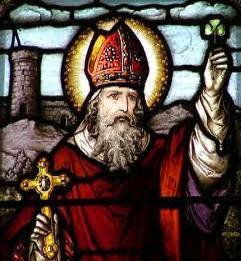
St Patrick – The Legend of St. Patrick, the Patron Saint of Ireland

Saint Patrick of Ireland

Born 387 AD, Died 493 AD

St Patrick wrote an autobiographical “confession” that has survived until our time. We can therefore hear him tell us about much of his life in his own words.

St Patrick begins by humbly calling himself “a sinner, a most simple countryman, the least of all the faithful and most contemptible to many…” His father was a deacon named Calpurnius, and as a boy Patrick lived in a settlement called Bannavem Taburniae in Scotland. His mother was Conchessa, who was related to St. Martin of Tours. As a boy of about sixteen years of age Patrick was taken captured by marauders and taken to Ireland to work as a slave, which he says was just punishment for not following the precepts of God.

Patrick tended his master’s sheep, and during that time he relates that “the Lord opened my mind to an awareness of my unbelief, in order that, even so late, I might remember my transgressions and turn with all my heart to the Lord my God, who had regard for my insignificance and pitied me in my youth and ignorance. He watched over me before I knew him, and before I had enough sense to distinguish between good and evil, and He protected me, and consoled me as a father would his son.”

Patrick began to love God, praying many times a day as he tended his flock. “More and more did the love of God, and my fear of him and faith increase. My spirit was moved so that in a day I said up to a hundred prayers, and in the night a like number. I used to stay out in the forests and on the mountain and I would wake up before daylight to pray in the snow, in icy coldness, in rain, and I used to feel neither ill nor any slothfulness, because, as I now see, the Spirit was burning in me at that time.”

“Therefore, indeed, I cannot keep silent, nor would it be proper, so many favors and graces has the Lord deigned to bestow on me in the land of my captivity. For after chastisement from God, and recognizing Him, our way to repay Him is to exalt Him and confess His wonders before every nation under heaven.”

St Patrick magnificently confesses, “For there is no other God, nor ever was before, nor shall be hereafter, but God the Father, unbegotten and without beginning, in whom all things began, whose are all things, as we have been taught; and His son Jesus Christ, who manifestly always existed with the Father, before the beginning of time in the spirit with the Father, indescribably begotten before all things, and all things visible and invisible were made by Him. He was made man, conquered death and was received into Heaven, to the Father who gave Him all power over every name in Heaven and on Earth and in Hell, so that every tongue should confess that Jesus Christ is Lord and God, in whom we believe. And we look to His imminent return to judge the living and the dead, and to render to each according to his deeds. He poured out his Holy Spirit on us in abundance, the gift and pledge of immortality, which makes the believers and the faithful into sons of God and co-heirs of Christ who is revealed, and we worship one God in the Trinity of His Holy name.”

One night in his sleep St Patrick heard a voice saying to him: “You do well to fast: soon you will depart for your home country,” and a short time later, “Behold, your ship is ready.” St Patrick fled from his master and went along a route as God directed until he had travelled two hundred miles to a port where he had never been.

St Patrick arrived just as a ship was prepared to set out, and although the men who owned the ship initially refused him passage, they later relented after St Patrick prayed to God for assistance.

After three days they reached land, but then they journeyed for twenty-eight days through uninhabited country. When their food ran out and hunger overtook them, the steersman asked St Patrick: “Christian, you say your God is great and all-powerful, so why can you not pray for us? We may perish of hunger, for it is unlikely indeed that we shall ever see another human being.”

St Patrick answered confidently: “Be converted by faith with all your heart to my Lord God, because nothing is impossible for Him, so that today He will send food for you on our road, until you be sated, because everywhere He abounds.” Soon a herd of swine appeared on the road before them, of which they slew many. They remained there for two nights until they were full of meat and well restored, for many of them had fainted and would otherwise have been left half-dead by the wayside. After this they gave the utmost thanks to God, and Patrick was esteemed in their eyes, and from that day on they had food abundantly. They discovered wild honey, besides, and they offered a share to Patrick, who said to them: “It is a sacrifice,” and would taste none of it.

That very same night Satan violently attacked St Patrick while he was sleeping, falling on him as if he were a huge rock, making it impossible for Patrick to move his limbs. Patrick cried out “Helias!” with all his might, and lo, the brilliance of the sun fell upon him and immediately released him of the weight. Patrick believed he was aided by Christ, and that His Spirit was crying out for him as it will be in the day of his affliction, just as it says in the Gospel: ‘In that hour’, the Lord declares, ‘it is not you who speaks but the Spirit of your Father speaking in you.’

St Patrick returned to his kinsfolk, who welcomed him and requested that after the great tribulations he had endured that he should not go away from them. In a short time, however, in a vision of the night, St Patrick saw a man whose name was Victoricus coming to him as if from Ireland with innumerable letters. He gave one of them to Patrick, who read the beginning of the letter: ‘The Voice of the Irish.’ As he was reading Patrick seemed to hear the voice of those who lived beside the forest of Foclut near the western sea, who were crying as if with one voice: ‘We beg you, holy youth, that you shall come and shall walk again among us.’ Stung intensely in his heart, Patrick could read no more and thus awoke.


On another night it seemed to Patrick that he saw someone, either within him or beside him, praying for him. Dumbfounded, he could not understand, though at the end of the prayer he heard these words: ‘He who gave his life for you, He it is who speaks within you.’ And thus Patrick awoke, joyful.

On a second occasion Patrick had a vision of someone once again praying within him, as if inside his own body. He was praying powerfully with sighs, at which Patrick was astonished and wondered who it could be who was praying within him. At the end of the prayer it was revealed that it was the Spirit. Patrick awoke and remembered the Apostle’s words: “Likewise the Spirit helps us in our weakness; for we know not how to pray as we ought. But the Spirit Himself intercedes for us with sighs too deep for utterance.” And again: “The Lord our advocate intercedes for us.”

St Patrick traveled to Gaul and Italy, meeting St Martin and St Germanus of Auxerre, where he stayed for several years. Patrick studied to become a priest and was then made a bishop in the year 432. Pope Celestine gave him the mission of returning to Ireland to convert the Irish to the True Faith, giving St Patrick his apostolic benediction.

Patrick’s own relatives were against this sacred calling, confronting Patrick with stories of the dangers he would be exposing himself to if he returned to heathen Ireland. St Patrick recalls that God supported him through these trials, and so he persevered in his intention. He said good-bye to his family and gave up his inheritance, consecrating his soul to God as he prepared to set forth on his mission.

He composed the following prayer to help with the coming task, a prayer which is now known as “St Patrick’s Breast Plate.”

“I bind to myself today
The strong virtue of the Invocation of the Trinity;
I believe in the Trinity in the Unity
The Creator of the Universe.

I bind to myself today
The virtue of the Incarnation of Christ with His Baptism,
The virtue of His crucifixion with His burial,
The virtue of His Resurrection with His Ascension,
The virtue of His coming on the Judgment Day.

I bind to myself today
The virtue of the love of seraphim,
In the obedience of angels,
In the hope of resurrection unto reward,
In prayers of Patriarchs,
In predictions of Prophets,
In preaching of Apostles,
In faith of Confessors,
In purity of holy Virgins,
In deeds of righteous men.

I bind to myself today
The power of Heaven,
The light of the sun,
The brightness of the moon,
The splendor of fire,
The flashing of lightning,
The swiftness of wind,
The depth of sea,
The stability of earth,
The compactness of rocks.

I bind to myself today
God’s Power to guide me,
God’s Might to uphold me,
God’s Wisdom to teach me,
God’s Eye to watch over me,
God’s Ear to hear me,
God’s Word to give me speech,
God’s Hand to guide me,
God’s Way to lie before me,
God’s Shield to shelter me,
God’s Host to secure me,
Against the snares of demons,
Against the seductions of vices,
Against the lusts of nature,
Against everyone who meditates injury to me,
Whether far or near,
Whether few or with many.

I invoke today all these virtues
Against every hostile merciless power
Which may assail my body and my soul,
Against the incantations of false prophets,
Against the black laws of heathenism,
Against the false laws of heresy,
Against the deceits of idolatry,
Against the spells of women, and smiths, and druids,
Against every knowledge that binds the soul of man.

Christ, protect me today Christ
Against every poison, against burning,
Against drowning, against death-wound,
That I may receive abundant reward.

Christ with me, Christ before me,
Christ behind me, Christ within me,
Christ beneath me, Christ above me,
Christ at my right, Christ at my left,
Christ in the fort,
Christ in the chariot seat,
Christ on the deck,
Christ in the heart of everyone who thinks of me,
Christ in the mouth of everyone who speaks to me,
Christ in every eye that sees me,
Christ in every ear that hears me.

I bind to myself today
The strong virtue of an invocation of the Trinity,
I believe in the Trinity in the Unity
The Creator of the Universe.”

Upon arriving at Ireland, St. Patrick was confronted by a tribal chieftain who thought to strike the Saint with his sword. Raising the weapon against Patrick, the chieftain’s arm became stiff and he could not move at all until he agreed to obey St Patrick. He was soon converted, and St Patrick continued with his mission.


St Patrick learned that the Irish chieftains had recently been called by Leoghaire, their head, to assemble at Tara for a celebration. St Patrick decided to go to Tara to confront the Druids, whose strange cult dominated the minds of the Irish.

On his way there, St Patrick rested at the residence of a tribal chieftan named Secsnen. He and his family were friendly to Saint Patrick and accepted the faith. Their youngest son, Benen, cried and clung to St Patrick when it came time to leave. He asked to stay with the saint, and with his parent’s permission, did so. He is known today as St Benignus.

Saint Patrick and his companions continued on their way, unaware that there were armed men waiting for them in the woods to kill them. They heard St Patrick drawing near, as he and his companions were signing praises to God, but when they moved to attack they saw nothing but eight deer and a fawn. They went away not understanding that God had preserved St Patrick and his friends once again.

It happened that the chieftains assembled on Easter Sunday in the year 433. That night they intended to light a great bonfire, and no other fires were allowed to be lit upon the island. St Patrick, on the hill across the valley from Leoghaire and his chieftains, lit a Paschal fire in defiance of the edict.

The Druids were not unaware of St Patrick’s arrival, and they knew what his presence meant to them. They had no trouble convincing the king that St. Patrick needed to be punished and his fire extinguished, yet God protected Patrick from their weapons and likewise the fire, whose flames could not be quenched.

The following day, Easter Sunday, St Patrick processed to Tara. Attempting to stop the procession, the Druids employed the assistance of demonic powers to cover St Patrick and his companions in a profound darkness. St Patrick asked them if they also had the power to remove the darkness, which they said they did not. Patrick prayed for relief, and at once the sunlight penetrated the darkness to completely dispel it.

In another effort to show their power, the Arch-Druid began to levitate high into the air, suspended by invisible demons. St. Patrick sent a prayer to God, and the Arch-Druid fell to his death upon the stones. Thus the Druids were defeated, and Leoghaire gave his permission to St Patrick to preach the Truth to the Irish.

St Patrick tells us himself that “it is tedious to describe in detail all my labors one by one. I will tell briefly how most holy God frequently delivered me, from slavery, and from the twelve trials with which my soul was threatened, from man traps as well, and from things I am not able to put into words. I would not cause offence to readers, but I have God as witness who knew all things even before they happened, that, though I was a poor ignorant waif, still he gave me abundant warnings through divine prophecy.”

St Patrick travelled the length and breadth of Ireland, building churches and preaching to the people. During his life he consecrated hundreds of bishops, and cast down many graven idols. When he was not preaching, St Patrick spent a great deal of time in prayer.

St Patrick had a favorite mountain where he retired to pray, and the place is known now as St. Patrick’s mountain. Later in life he went there and fasted for forty days in a small cave which little protected him from the elements. He spent the time praying for the Irish people, and obtained from God the following concessions:

1. That many souls would be freed from the pains of purgatory through his intercession.
2. That whosoever in the spirit of penance should recite his hymn before death would attain the heavenly reward.
3. That the barbarian hordes would never obtain sway in his Church.
4. That seven years before the Judgment Day, the sea would spread over Ireland to save its people from the temptations and terrors of the antichrist,
5. and finally, that Patrick himself should be deputed to judge the whole Irish race on the last day.

St Patrick died on the 17th of March, 493. He awaits the day of resurrection, as he wrote in his Confession: “For the sun we see rises each day for us at His command, but it will never reign, neither will its splendor last, but all who worship it will come wretchedly to punishment. We, on the other hand, shall not die, who believe in and worship the true sun, Christ, who will never die, no more shall he die who has done Christ’s will, but will abide for ever just as Christ abides forever, who reigns with God the Father Almighty and with the Holy Spirit before the beginning of time and now and forever and ever. Amen.”

Permanent link to this article: https://luisapiccarreta.com/317-feast-day-of-st-patrick/